

Jhaveri and colleagues studied how seedlings in India’s rainforests respond to dry spells, and the different characteristics that could explain such responses. Interestingly, the team found that anatomical traits, such as xylem diameter and stomata density were the best to explain drought survival
The researchers grew seedlings from 16 tree species in a greenhouse, simulating both normal and drought conditions. They measured various plant features and monitored how well the seedlings performed, tracking their growth, survival, and ability to photosynthesize.
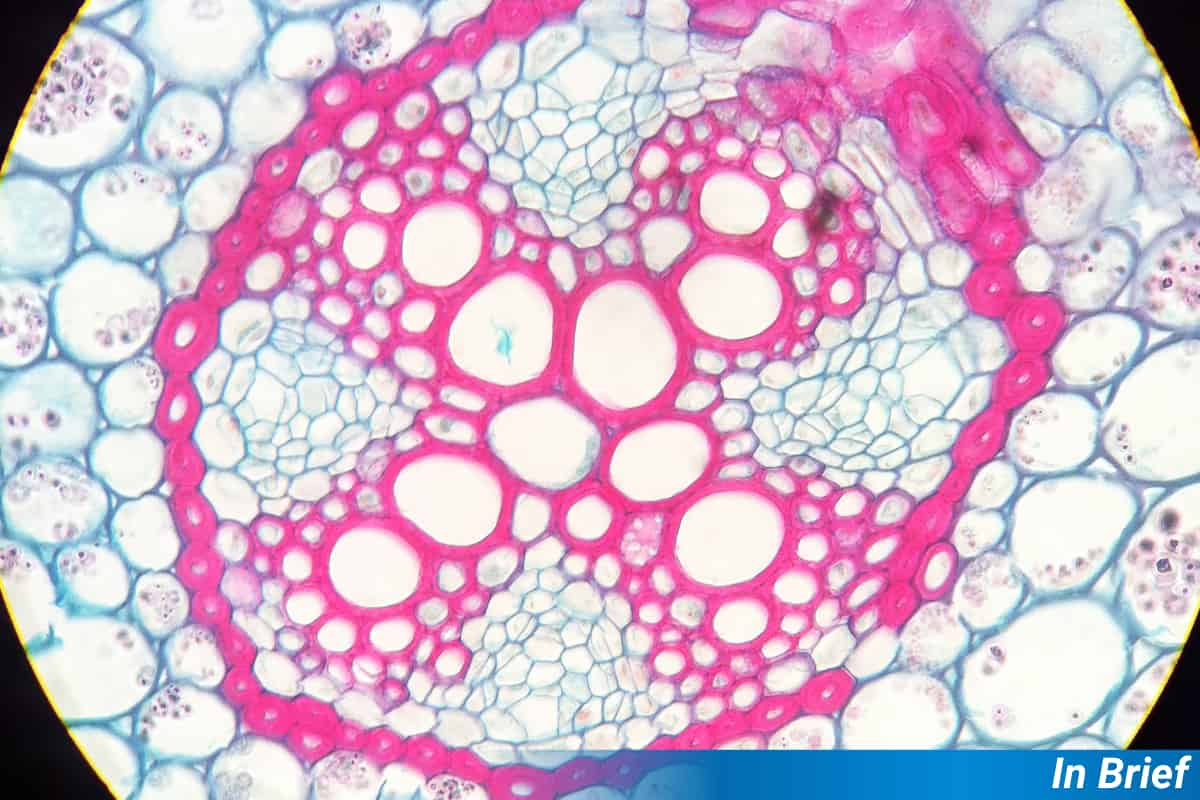
Surprisingly, commonly used traits, such as leaf thickness and mass, were not the best predictors of plant responses to drought. Instead, it was the size of the xylem –the tissue that act water pipes– and stomata –the leaf pores that allow gas exchange– which provided better information. For instance, seedlings with smaller xylem and stomata were less affected by drought, both in terms of growth and survival.
Previous studies often focused on easily measurable traits. This research highlights the importance of looking at internal structures that directly control water use and provides significant evidence that these anatomical features might be key to predicting how different tree species will cope with changing climates.
Jhaveri, R., Cannanbilla, L., Bhat, K. S. A., Sankaran, M., & Krishnadas, M. (2024). Anatomical traits explain drought response of seedlings from wet tropical forests. Ecology and Evolution, 14 (19), e70155. https://doi.org/10.1002/ece3.70155 (OA)