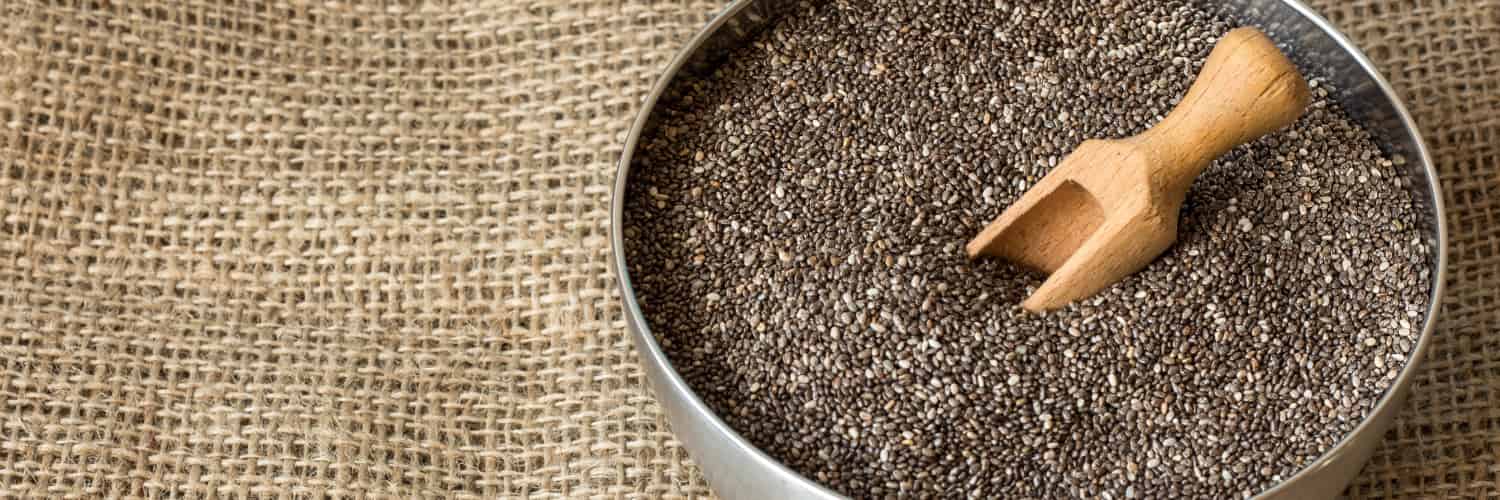


Chia seeds have become really popular for being super healthy, but what exactly makes this tiny seed so good for us? A recently published review in Annals of Botany by Tannaz Zare and colleagues provided an overview of the botanical, morphological, and biochemical features of chia plants, their seeds and seed coatings to better understand what makes chia such a remarkably healthy food.
Comprehensive analyses have revealed that chia is rich in omega-3 fatty acids, protein, fiber, and antioxidants. However, the exact biological mechanisms behind these benefits remained unclear. A significant breakthrough occurred when an international team of researchers fully sequenced the chia genome. With this genomic information, they have started mapping the genetic instructions responsible for chia’s nutrient production.
A key focus has been identifying the genes involved in fatty acid biosynthesis. By mapping the genomic hotspots for omega-3 production, scientists hope to refine chia’s nutritional power or transfer these traits to other crops. Transcriptomic analysis of gene expression patterns is also providing clues about how chia regulates its nutrient profile during different growth stages. This gives insights into the seed’s internal decision-making that could optimize its nutritional output.
While chia’s chemical profile has been well-documented, questions remain around physiological impacts. Some animal and in vitro studies indicate it may help lower blood pressure, blood sugar levels and reduce inflammation. However, more conclusive evidence is needed from rigorous human clinical trials. Researchers are now recruiting volunteers for large-scale studies to evaluate chia’s potential disease prevention effects.
Beyond nutrition, scientists are eager to explore chia’s pharmaceutical and agricultural applications. Can seed extracts fight harmful microbes? Might chia genes, when transferred to other food crops using genetic engineering techniques, make them equally nutritious? Such applications would require developing reliable methods for genetically modifying chia.
Achieving this goal from a genetic perspective requires new tools. Researchers are utilizing modern techniques like CRISPR gene editing to create targeted mutations and visualize changes in living chia plant cells. They are also working to establish stable plant transformation protocols.
Once adopted, these technologies provide an essential foundation for mutant studies in chia and will enable genetic manipulation for gene function studies. In the future, the establishment of these techniques, along with stable transformation protocols for chia, may allow for the creation of a chia mutant collection that can be used as a community resource for functional analysis of chia genes, as has been done for other plants such as Arabidopsis, rice, maize, sorghum, Brachypodium, and camelina.
By exploiting its newly cracked genetic code, researchers ultimately aim to optimize chia’s nutritional impact. The goal is to understand chia’s secret to success at the molecular level and potentially engineer super-seeds that that could match or even exceed its nutritional benefits. Step by step, scientists are beginning to unlock the genomic roots of this extraordinary superfood.
READ THE ARTICLE
Zare T., Fournier-Level A., Ebert B. and Roessner U. (2024) “Chia (Salvia hispanica L.), a functional ‘superfood’: new insights into its botanical, genetic and nutraceutical characteristics” Annals of Botany. https://doi.org/10.1093/aob/mcae123