

The interactions between plants and pollinators are one of nature’s most fascinating mutualistic relationships, shaped by millions of years of evolution. In this partnership, both sides benefit: plants rely on pollinators to reproduce by transferring pollen between flowers, while pollinators depend on plants for essential resources like food and nesting materials.
Most research has traditionally focused on floral resources like nectar, pollen, resins, and oils —one can think of these as the “main course” that pollinators seek. Still, it is crucial to remember that the nutrients plants provide, such as nitrogen, and phosphorus, are essential for the health of pollinator communities and the structure, and functioning of ecosystems as a whole.
However, sodium is an often-overlooked nutrient, probably because its levels in plants are usually low. While it might seem a subtlety, sodium is as essential to many animals. For example, animals such as cattle and ants are drawn to sodium-rich sources like salt licks or enriched foods. Similarly, pollinators such as bees and butterflies have been known to seek out non-floral sources of sodium, like human sweat or salty puddles. These behaviours suggest that sodium is a critical nutrient that could influence pollinator attraction and foraging patterns.
With this in mind, a research team led by Ethan VanValkenburg conducted a study in a subalpine meadow in Colorado to explore how sodium levels in nectar influence pollinator behaviour, diversity, and the frequency of interactions between plants and pollinators. Specifically, they sought to answer several key questions: Do plants with higher sodium levels attract more pollinators? Do different species of pollinators respond differently to varying sodium concentrations? Does the presence of sodium affect the variety and behaviour of these visitors? To investigate these questions, they conducted experiments with four plant species to which a conventional nectar solution or a sodium-enriched solution was applied.
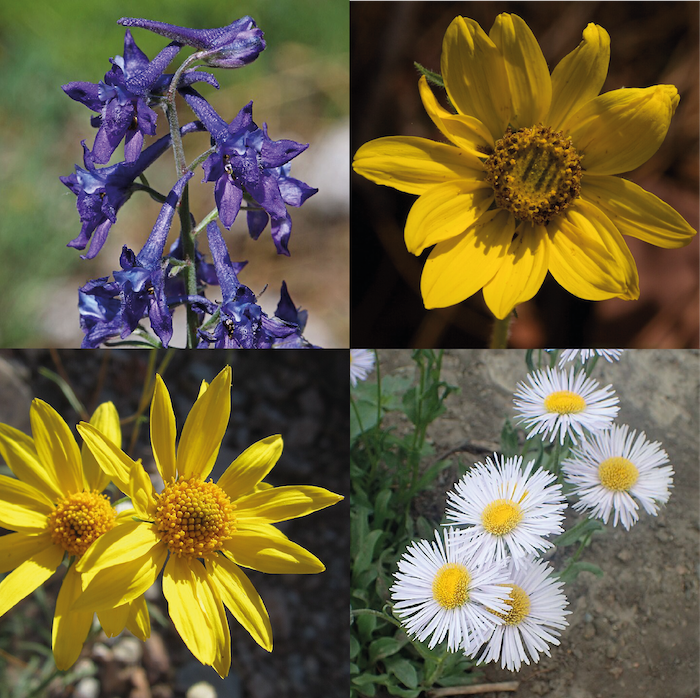
They found that flowers with sodium-enriched nectar were significantly more attractive to pollinators. These flowers received twice as many visits and hosted one and a half times as many pollinator species compared to those with regular nectar. This attraction was consistent across all four plant species studied. Additionally, nearly all observed pollinator species showed a preference for sodium-enriched nectar, highlighting sodium as a compelling lure.
This preference occurs because pollinators, such as bees, benefit significantly from sodium, which is essential for maintaining their digestive, excretory, and neuromuscular systems. Many pollinators often have insufficient sodium in their diets, leading them to seek this vital nutrient from floral resources like nectar. As a result, they increasingly visit and depend on plants to meet their nutritional needs.
Another finding was that sodium-enriched nectar not only increased the number of floral visits but also attracted a wider variety of pollinator species. This diversity suggests that sodium might be crucial in sustaining a healthy and varied pollinator population. However, a question that remains uncertain is how pollinators recognize and detect sodium-enriched nectar.
Finally, they showed that some pollinators even altered their foraging behaviour, spending more time on flowers with sodium-enriched nectar and diversifying their diet to maximize sodium intake. However, not all pollinators exhibited this change; for example, Bombus appositus primarily foraged from one plant species and did not significantly alter its diet breadth.
These findings underscore the “salty nectar hypothesis,” demonstrating that even minor components in nectar, such as sodium, can significantly influence plant-pollinator interactions. However, it remains uncertain whether plants with higher sodium levels in their nectar gain a reproductive advantage. This uncertainty highlights the need for further research into how variations in nectar sodium content occur across different plant communities and species. Given that sodium has a critical role for many animals, understanding these variations is essential. Exploring this aspect will deepen our knowledge of ecological dynamics and help address the broader implications of sodium availability on plant-pollinator relationships.
READ THE ARTICLE
VanValkenburg, E., Gonçalves Souza, T., Sanders, N. J., & CaraDonna, P. (2024). Sodium‐enriched nectar shapes plant–pollinator interactions in a subalpine meadow. Ecology and Evolution, 14(7), e70026.

Victor H. D. Silva is a biologist passionate about the processes shaping interactions between plants and pollinators. He is currently focused on understanding how urbanisation influences plant-pollinator interactions and how to make urban green areas more pollinator-friendly.
Portuguese translation by Victor H. D. Silva (in progress).



.jpg?ref=botany.one#/media/File:Showy_Goldeneye_(8950887020).jpg)
