


Melatonin is a hormone that is found across all three domains of life – Bacteria, Archaea and Eukaryota. It is most well known as the hormone that helps regulate the sleep cycle of humans, however, melatonin has different functions in plants. Primarily, it has been reported to activate various signalling events during plant responses to abiotic and biotic stress conditions, helping to safeguard them under stressful conditions. Scientific studies have found that melatonin can induce tolerance to various abiotic stress conditions, including heavy metals, high temperature and salinity.
During stress, melatonin enhances multiple adaptive responses in plants. It can boost stomatal conductance, photosynthesis, and transpiration, increase nutrient uptake and promote sugar metabolism. It also upregulates processes that prevent oxidative damage in cells, including synthesis of antioxidants and scavenging of reactive oxygen species. Yet, the underlying mechanisms of melatonin in alleviating drought stress have rarely been investigated in crops. Specifically, little is known about whether foliar or rhizospheric application of melatonin improves stress tolerance or not.
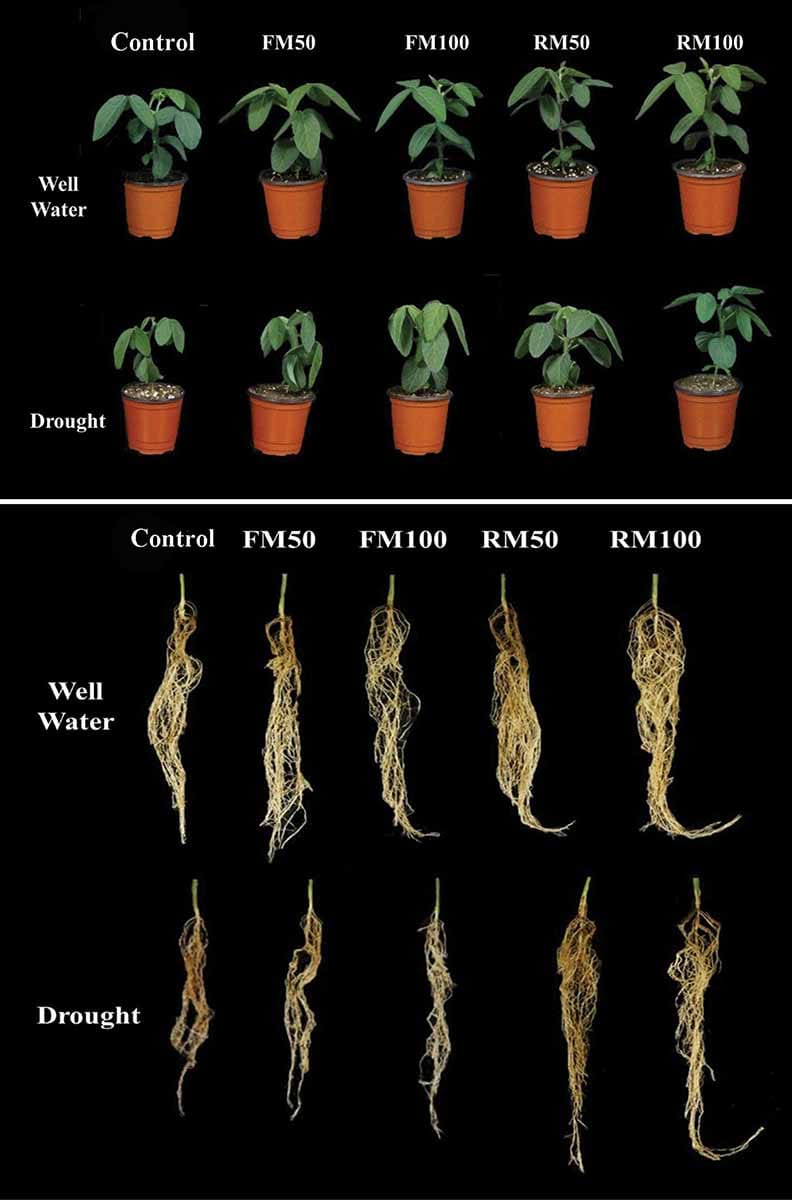
In their new study published in AoBP, Imran et al. investigate the roles of exogenous melatonin application (foliar or root zone) in improving drought stress tolerance of soybean (Glycine max) seedlings. Their results showed that pre-treatment of soybean seedlings with melatonin was found to significantly mitigate the negative effects of drought stress on plant growth-related parameters and chlorophyll content. The beneficial impacts against drought were more pronounced by melatonin application in the rhizosphere than in foliar treatments. The melatonin-induced enhanced tolerance could be attributed to improved photosynthetic activity, reduction of abscisic acid and drought-induced oxidative damage by lowering the accumulation of reactive oxygen species and malondialdehyde.
This study demonstrated that melatonin-induced improvement in drought stress tolerance in soybean plants was associated with enhanced functioning of the antioxidant defence machinery and the scavenging of hydrogen peroxide, which alleviated the oxidative damage caused by drought stress. The root zone application of melatonin resulted in significantly higher physiological and phytohormonal regulation than foliar application. This could be an essential factor determining the feasibility of melatonin application at large-scale field levels. However, the findings Imran et al. provide good evidence for the physiological role of melatonin and serve as a platform for possible applications in agricultural or related fields of research.