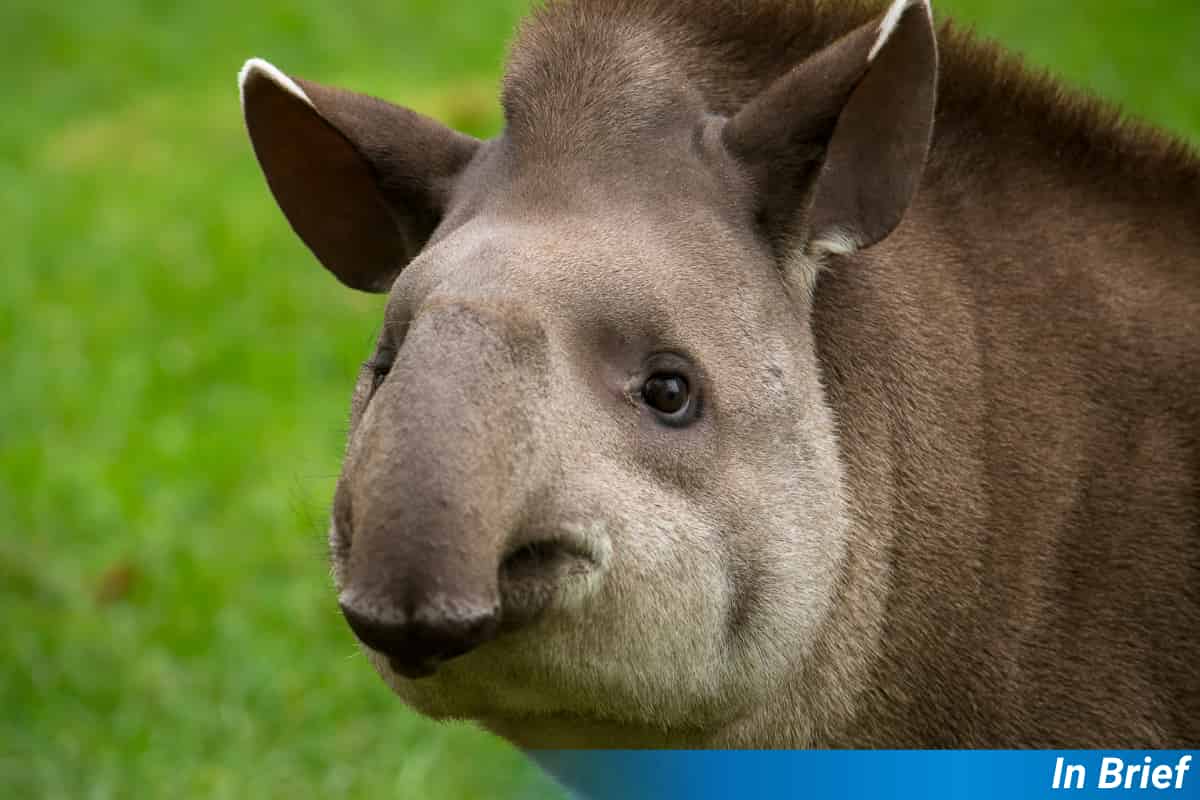


The extinction of large seed dispersers raised various concerns about the role of dispersers that can still be found in ecosystems nowadays and their impact on the plants that depend on them for their dispersal. In their study, Giombini and colleagues compared different aspects of the seed dispersal provided by tapirs, howler monkeys, and foxes for the queen palm (Syagrus romanzoffiana).
The team fed palm fruits to captive animals and tracked how long it took for seeds to pass through their digestive systems. They then combined this information with field data on how far these animals travel daily.
While they found no difference in how much the seeds germinated after passage through the digestive tract of these three animals, the research team found that tapirs can spread seeds 1.2 kilometres away from parent trees, a distance 14 times farther than foxes and 40 times farther than howler monkeys. Therefore, tapirs play a unique role as long-distance dispersers of palm seeds.
The study by Giombini reinforces the importance of large animals as seed dispersers. By combining experimental and field data, this research provides detailed data on the relative importance of each animal species in seed dispersal and highlights which processes might be lost if these species become extinct.
Giombini, M.I., Pésole, D., Benítez, A.D., Costa, S.A., Foletto, L.F., Pizzio, C.E., Yordanoff, A.L.D., Gatti, M.G. and Di Bitetti, M.S. (2024) ‘The irreplaceable role of surviving megafauna in long-distance seed dispersal: evidence from an experiment with Neotropical mammals’, Oikos, Early View, https://doi.org/10.1111/oik.10488