


The Poales is a large order of flowering plants that includes grasses, sedges, rushes and bromeliads. They typically have small flowers enclosed by bracts that form a compound inflorescence arranged along a spikelet, but much structural diversity exists within this basic scheme. Indeed, spikelet morphology is different enough between species to be used for plant classification and identification.
In a new study published in the Annals of Botany, scientists have examined the interesting case of a species having spikelets resembling those found in both sedges and grasses and also having separate male and female plants with dimorphic inflorescence morphology. The male and female spikelets are so different, that historically they were used to erroneously classify the two plant forms as different species. This new study by Fomichev et al is the first to use advanced imaging techniques to clarify the morphology of the male and female floral arrangements in Leptocarpus denmarkicus, a species of the Restionaceae family in the Poales order.
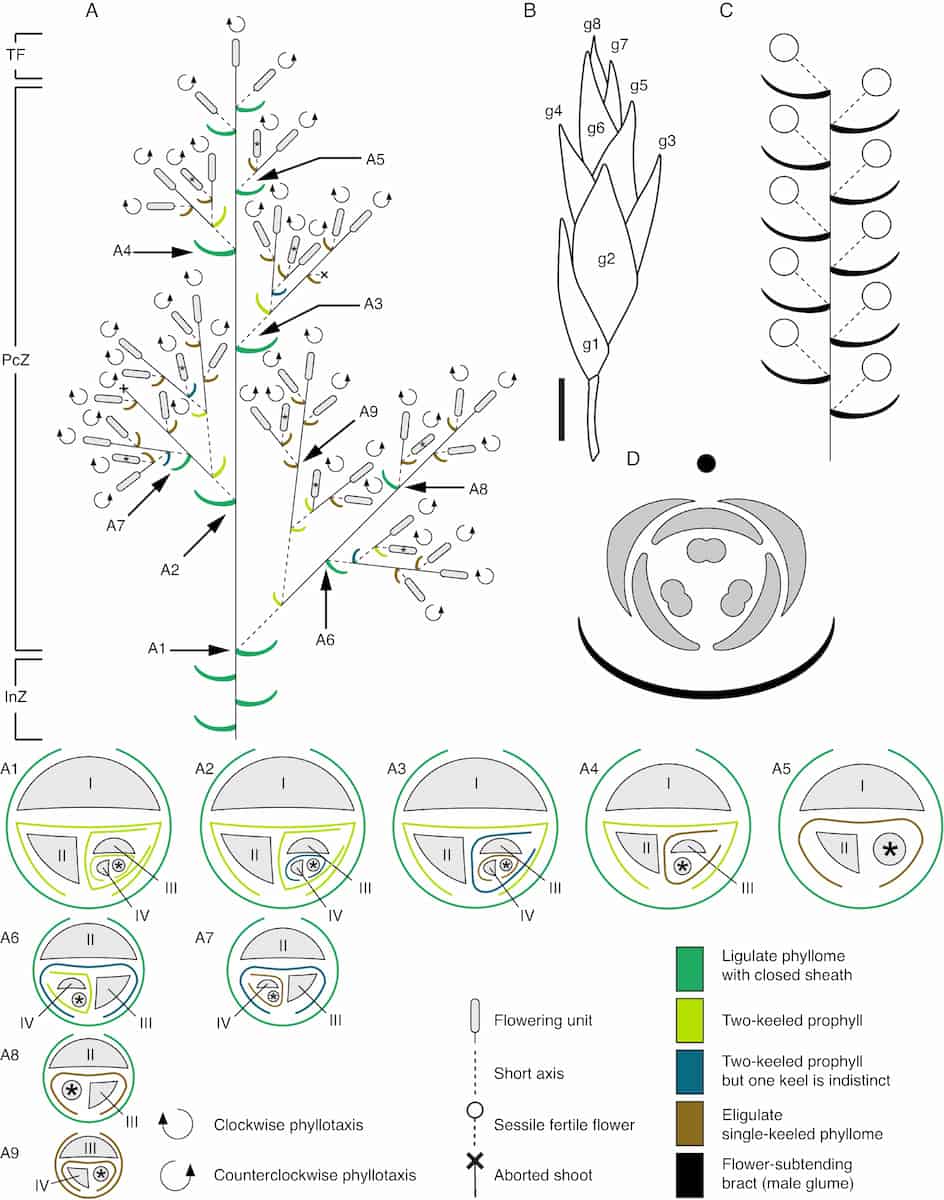
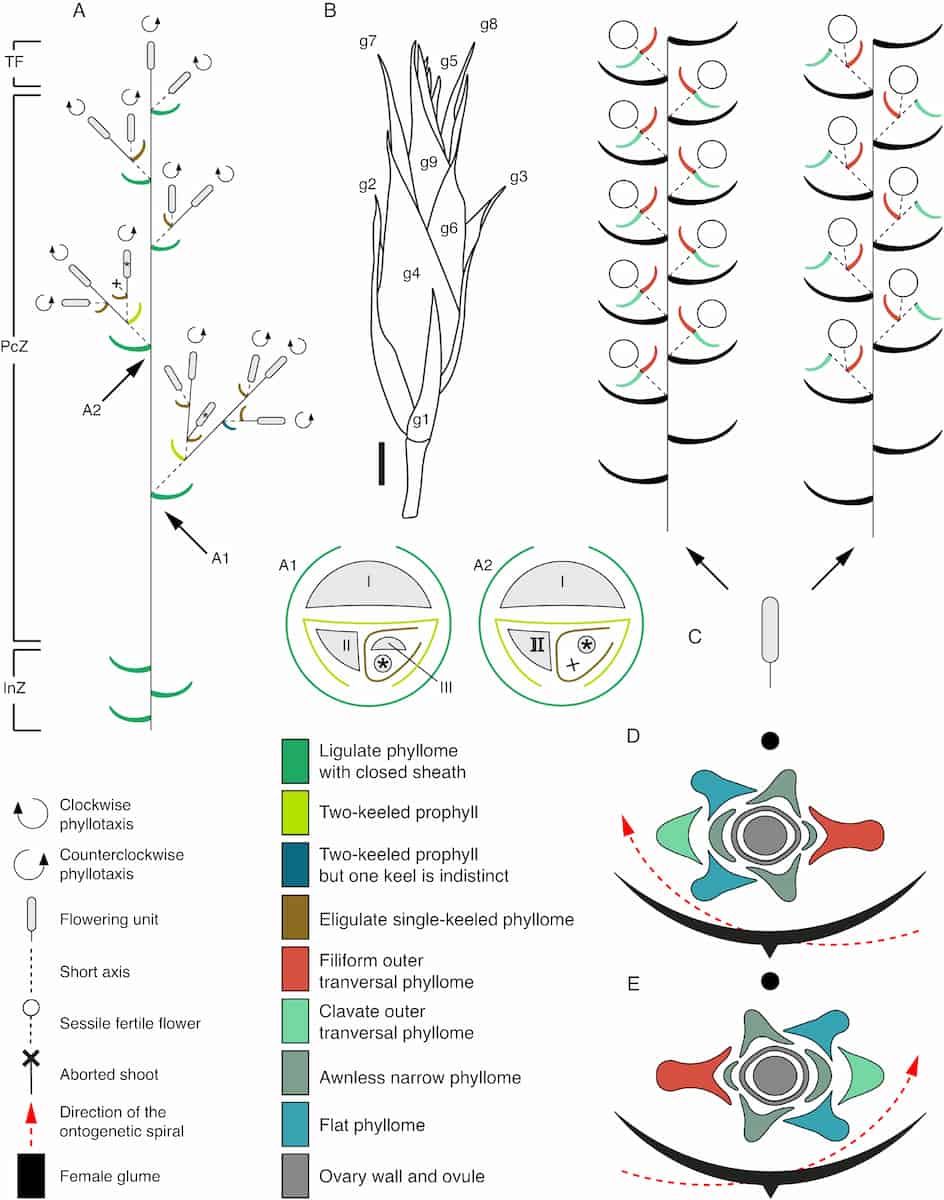
“This study redefines the structure and developmental basis of inflorescences and identifies a novel seed dispersal mechanism in Restionaceae,” write Fomichev et al. “The findings challenge long-standing assumptions on spikelet and bracteole identity and provide compelling evidence for evolutionary plasticity within Poales.”
Male and female inflorescences were collected from plants near Shannon Airstrip, Western Australia. Scanning electron microscopy and high-resolution X-ray computed tomography were used to assess their respective morphologies in fine detail. Fomichev et al found that Restionaceae spikelets are more functionally and structurally diverse that previously known.
The authors describe in detail the compound spike of the female flowering unit as well as the simple spike produced by male plants, setting their observations against previously published descriptions. Additionally, Fomichev et al report that L. denmarkicus have an awned floral bract that is capable of hygroscopic movement that likely plays a positive role in seed dispersal, a potentially unique adaption in the Restionaceae family.
“For a long time, inflorescence structure, classification and evolution have been some of the most debated topics in plant morphology,” write Fomichev et al. “By addressing unresolved questions about organ homology and structural organization, this research contributes to a deeper understanding of Restionaceae morphology and the evolutionary history of inflorescences in Poales.”
The researchers use their examinations as a case study to better understand the complex evolutionary history of flower morphology in the Poales.
READ THE ARTICLE
Fomichev, C.I., Macfarlane, T.D., Briggs, B.G. and Sokoloff, D.D. (2025) “Hygroscopic awns and inflorescence architecture in a wind-pollinated Australian monocot: functional convergence with grasses,” Annals of Botany (mcaf167). Available at: https://doi.org/10.1093/aob/mcaf167.
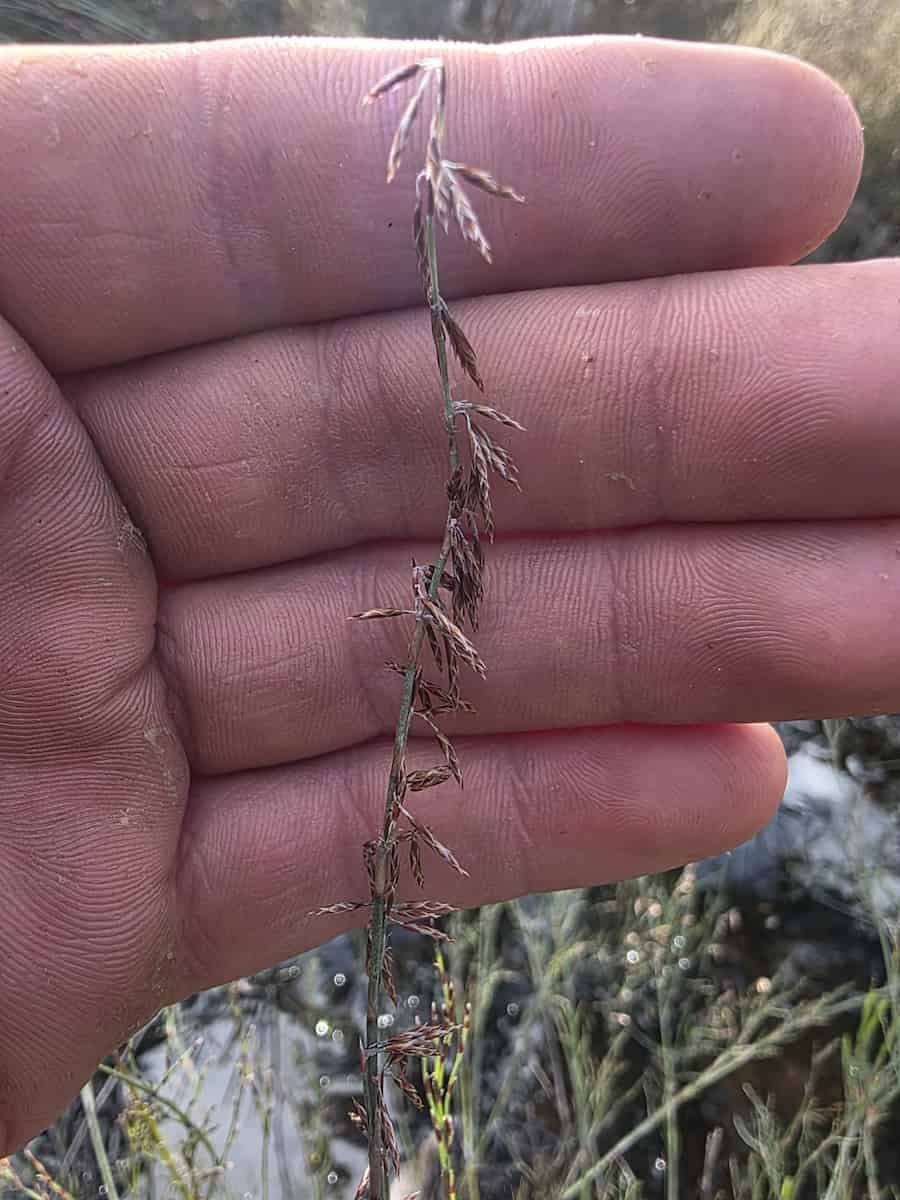
Cover image: Leptocarpus denmarkicus identified by Bryce van der Heide / iNaturalist. CC-BY-NC