

Volcanic eruptions naturally have a major impact on their surrounding ecosystems, but how much ash is too much? In a first-of-its-kind study, published in the Journal of Vegetation Science, Medina et al tested seed germination in various ash depths surrounding Tajogaite, the newest volcano on the Canary Island of La Palma.
“Tephra deposition is one of the most critical sudden alterations caused by volcanic eruptions in ecosystems,” write Medina et al, with tephra defined as the solid material ejected into the air during a volcanic eruption. Previous studies have shown that plant survival decreases with increasing tephra thickness, and the effect can last decades. But, the viability of seed banks after volcanic activity, and their ability to regenerate vegetation, had not yet been thoroughly examined.
As a result, Medina et al set out to understand the effect of tephra thickness on seed viability and seedling emergence in a 7 km cline of decreasing tephra thickness from the Tajogaite crater to the southern part of La Palma, a volcanic, medium-sized island located in the Atlantic Ocean 100 km off north-west Africa.
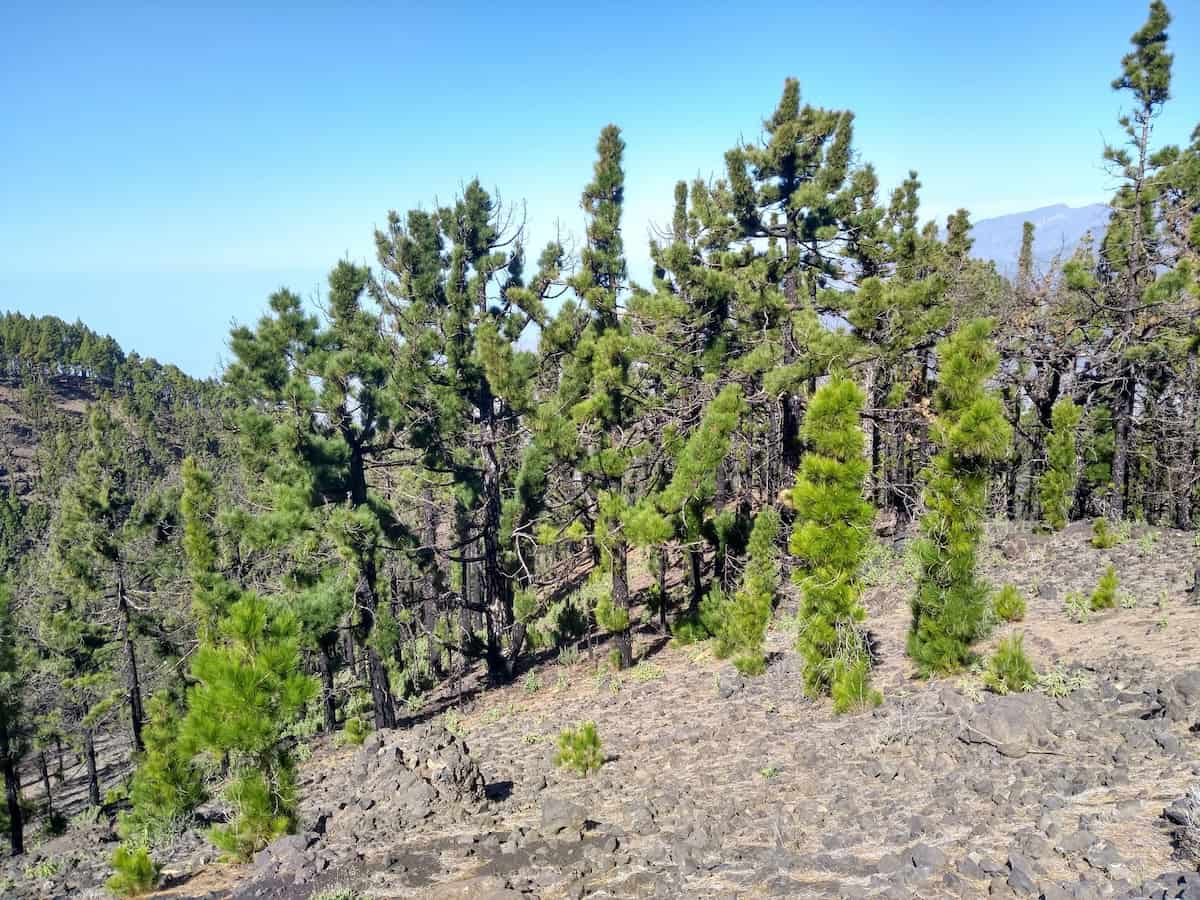
Medina et al collected approximately 2000 seeds from four endemic species in an area 5 km from the main crater: Pinus canariensis (Pinaceae, tree), a pine species known to be well-adapted to volcanic eruptions and seeds that are susceptible to intense fire, plus Lotus campylocladus (Fabaceae, forb), Cistus symphytifolius (Cystaceae, shrub) and Chamaecytisus proliferus (Fabaceae, shrub), which are understory species whose seed germination is positively affected by heat.
Two separate experiments were performed: a controlled experiment in which collected seeds were planted in a nursery under varying ash depths and a field survey in which seedling emergence was monitored following a gradient from the crater to 7 km south. Monitoring was started at the end of the eruption and continued over two years.
Medina et al found that ash depths greater than 5 cm have a catastrophic effect on seed germination.
“We demonstrated that tephra layers exceeding 5 cm significantly inhibit germination of endemic pine forest species, suggesting profound post-eruption changes in plant composition within 5 km of the crater,” they write.
After 18 months of observation in the nursey, no seedlings emerged from depths of 10 to 150 cm of ash. Additionally, only a few of the largest seeds from the P. canariensis and Ch. proliferus species emerged in depths of 5 cm of ash.
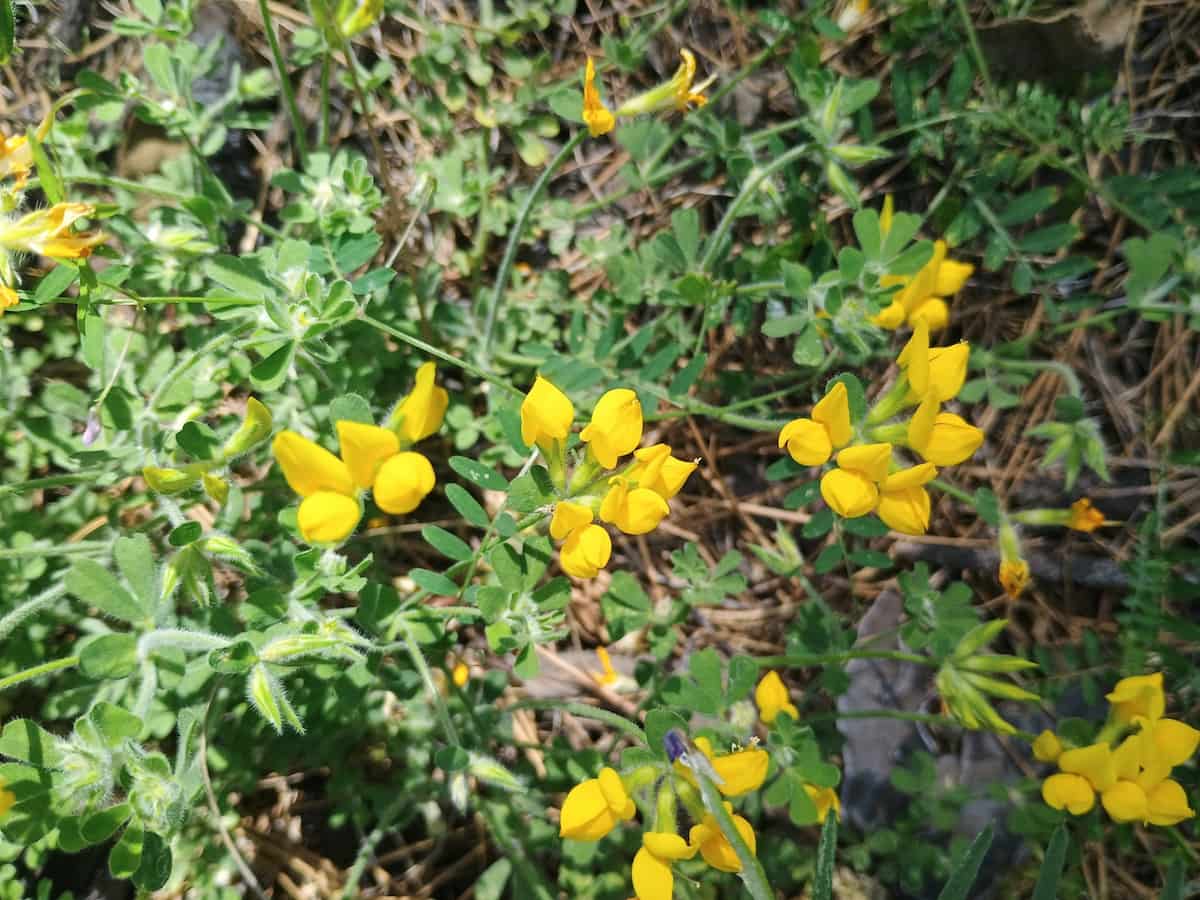
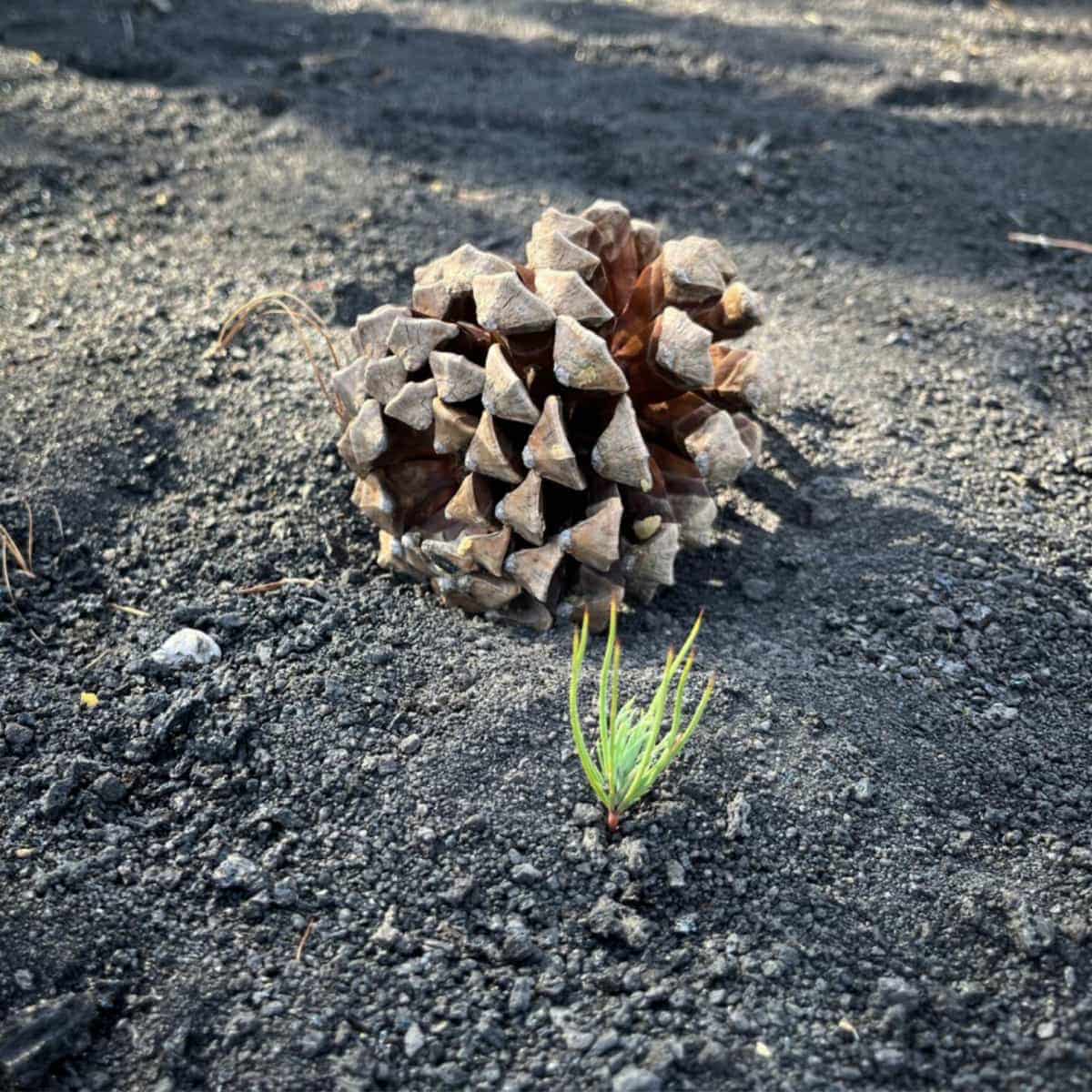
In the field survey, two years of observation showed that seedlings were predominately found in the thinner layers of ash, less than 5 cm. The exception was P. canariensis, which has larger seeds, and yielded seedlings in thicker tephra depths of 10 cm in the first year and up to 150 cm depths in the second year of observation.
However, Medina et al hypothesize that the P. canariensis seedlings found in ash thicknesses greater than 5 cm originate from new seeds produced by plants that survived the volcanic eruption, rather than from a pre-existing, established seed bank. This is because P. canariensis produces cones that open to aerially disperse seeds when exposed to heat, such as that found in a volcanic eruption.
Based on their findings, Medina et al conclude that “the extinction risk of island plant species is higher for short-life-cycle plant species that rely on the seed bank and increases with the intensity of volcanic eruptions and ash deposition”.
READ THE ARTICLE
Medina, F.M., Guerrero-Campos, M., Hernández Martín, G., Boulesteix, T., Weiser, F., Walentowitz, A., Jentsch, A., Beierkuhnlein, C., Marrero, P., Shatto, C., Chano, V. and Nogales, M. (2025) “Seed bank and ashfalls: The ecological resetting effect of the recent tajogaite volcano eruption in the canary Pine Forest (La Palma, Spain),” Journal of Vegetation Science: official organ of the International Association for Vegetation Science, 36(3). Available at: https://doi.org/10.1111/jvs.70045.
Cover image: Medina et al 2025. CC-BY