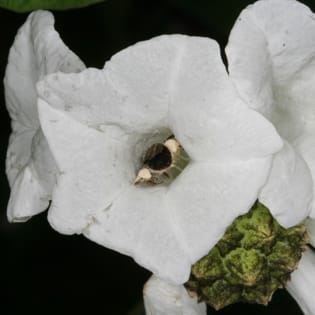



- Cordia leucocephala
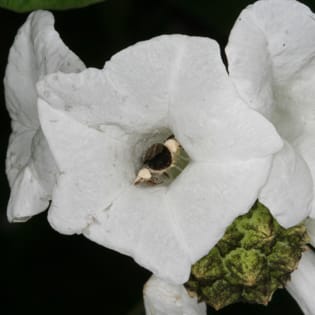
Oligolectic bees and host-plants frequently depend on each other to rear offspring and to set fruit, respectively. Milet-Pinheiro and Schlindwein (pp. 17–27) investigate the close relationship between the bee Ceblurgus longipalpis and the distylic shrub Cordia leucocephala and find a one-to-one reproductive inter-dependence between them, suggesting this is a rare case of monolecty. Ceblurgus longipalpis has evolved prolonged mouthparts that enable access to pollen and nectar that are hidden to bees of other species.