


Lignin is an important structural protein found in xylem vessels, which transport water and minerals, as well as in fibre cell walls. Lignins can also be produced as a defence mechanism in response to pathogens or wounding as a means of incrusting tissue to provide mechanical resistance or as a means of blocking opened tissues.
Additionally, lignin plays a role in hausteria development, the specialised intrusion organ that sits at the interface of parasitic plants and their host. In particular, lignin is involved in the development of the xylem bridge that connects the vasculature of the parasite to its host. However, until a recent paper published in the Annals of Botany, it has been unclear whether lignins at the host-parasite interface are produced by the parasitic plant to aid its attachment or solely by the host as a means of defence.
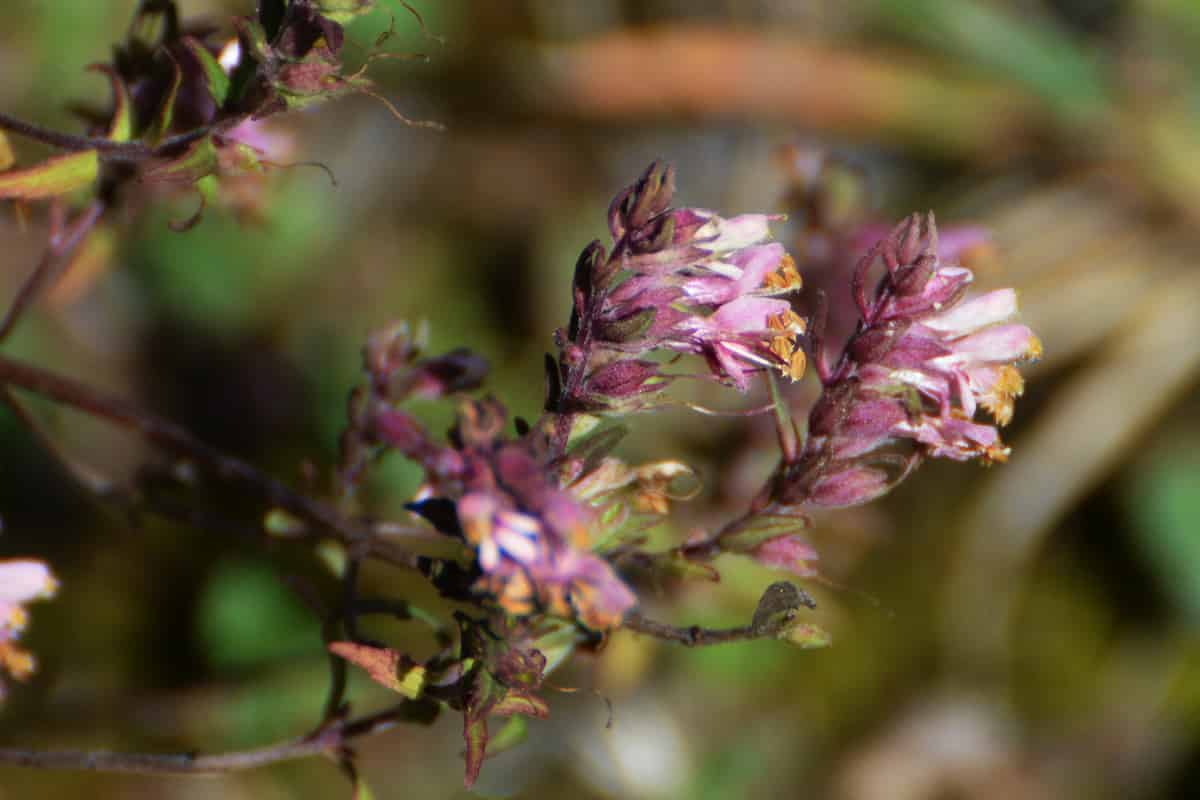
“To gain insights into the origin of lignolic interfacial substances, i.e. their deposition by the host versus the parasite, we compared the architecture of contact deposits in non-infective prehaustoria and haustoria of Rhinanthus minor and Odontites vernus attached to roots of Arrhenatherum elatius ssp. bulbosum and Lolium perenne,” write Pielach et al.
The study combined a variety of cell biology techniques including histology, immunocytochemistry and Raman spectroscopy to characterise and confirm the lignin-rich interfacial deposits.
Pielach et al found that while most of the lignin at the interface is produced by the host, presumably released as part of the host defence mechanisms to deter the parasite, at least some of the lignin originates from the parasite.
“Our results suggest that interfacial lignin deposition is not attributed solely to the host, calling for functional and molecular investigations and a possible reinterpretation of its function in the parasitic plant–host interactions,” conclude Pielach et al.
It remains to be determined what benefit these parasite-derived lignins confer to the parasite when initiating a hausterium attack.
READ THE ARTICLE
Pielach, A., Allison, G., Leroux, O. and Popper, Z.A. (2025) “Prehaustoria of root hemiparasites Rhinanthus minor and Odontites vernus (Orobanchaceae) produce lignin-rich interfacial deposits closely resembling those of attached haustoria,” Annals of Botany. Available at: https://doi.org/10.1093/aob/mcaf149. (FREE)
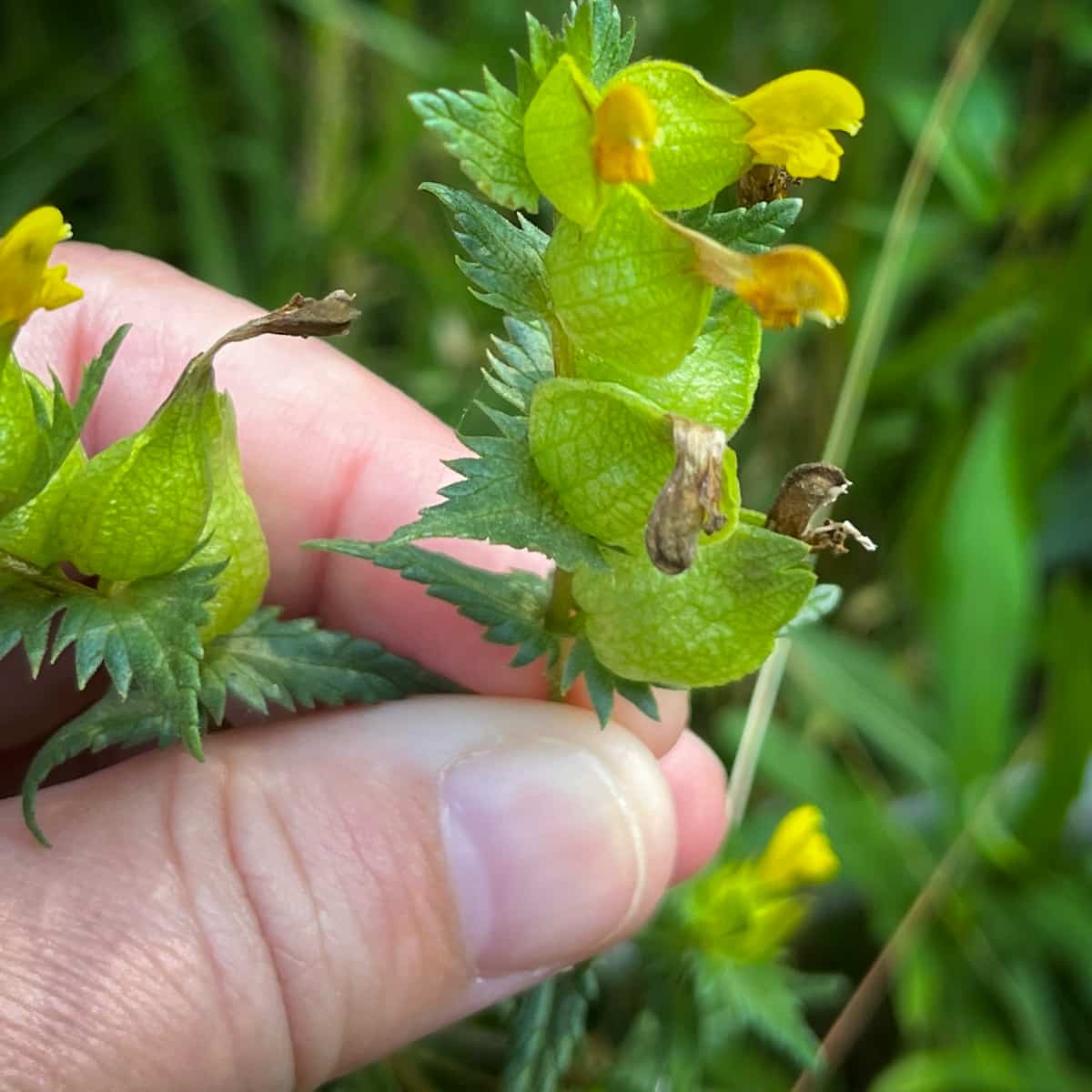
Cover image: Rhinanthus minor in USA by Julie Travaglini / iNaturalist. CC-BY