

Orchids are known to form symbiotic relationships with mycorrhizal fungi, but fungal communities are diverse. So how do orchids from around the world determine which species to associate with? A recent paper published in Plant Diversity has begun to untangle whether plant evolutionary history or growth environment is the most important in establishing mycorrhizal symbiotic relationships.
Wang et al found that trophic mode, i.e. how an orchid gets its nutrition, is an important factor in determining the fungal community’s composition. They also found that orchid species in Australia are much more picky in their associations than orchids in Eurasia and Africa, resulting in lower fungal diversity within their mycorrhizal communities. Additionally, climate, soil and vegetation have a small but significant effect on fungal diversity. However, the phylogeny, or evolutionary history of orchid species, does not appear to play a role.
“[W]e investigate how plant phylogeny, trophic mode, biogeographic distribution and environmental niche collectively influence the diversity and composition of mycorrhizal fungal communities across the Orchidaceae, spanning broad phylogenetic and ecological scales,” write Wang et al. “Altogether, our findings indicate that mycorrhizal communities in the orchid family are likely shaped by multiple, intertwined factors related to orchid ecophysiology and biogeography on a global scale.”
Mycorrhizal symbiosis in the Orchidaceae dates to at least 15–20 million years ago, as seen in amber fossils from the Dominican Republic, according to Strullu-Derrien et al., who were not involved in this study. Strullu-Derrien et al write that the orchid-mycorrhizal relationship is an ancestral state shared by the whole orchid family, in which fungal hyphae form coils in the cortical root cells of orchid species. This symbiotic relationship is so important that orchids at the seed germination stage rely on their associated fungi for their nutritional needs and would not survive without them.
Previous studies on orchid-associated fungi have demonstrated a range of factors involved in the diversity of the mycorrhizal community. Some studies showed that closely related orchids host similar fungal communities. Other studies have shown that the fungal community is influenced by the trophic mode of the orchid – i.e. whether they are autotrophic (fully autonomous in their nutritional needs) or mycoheterotrophic (fully dependent on fungi) or somewhere in between. Additionally, the location (or biogeography) of the orchid was shown to be important, with fungal specificity highest amongst the Australian orchids compared to Eurasian and African species. Furthermore, climate, soil and vegetative variables have all been shown to influence an orchid’s fungal diversity. However, no study to date had looked at the orchids on a global scale, across the entirety of the Orchidaceae family, and compared all those different variables.
“Although previous studies have investigated the effect of orchid phylogenetic relatedness, trophic mode, biogeographic distribution and habitat condition on fungal community composition in orchid roots, their impacts have only been examined at a small phylogenetic and ecological range of orchid species,” write Wang et al.
And so, Wang et al decided to test whether those studies’ findings hold true over larger phylogenetic scales by looking at orchids growing all around the world. They accessed an orchid-fungal association dataset that includes information for 750 host orchid species and their fungal associates. Data was gathered from 50 countries and/or regions, and all major phylogenetic clades within the Orchidaceae family were represented. The orchid’s trophic mode, biogeographic region, and environmental data were taken into account when calculating the associated fungal species diversity.
After evaluating the effect of orchid phylogeny (relatedness), trophic mode (nutrition source), biogeography (location), biome and environmental factors Wang et al found that fungal diversity is related to orchid trophic mode and biogeography rather than the orchid species’ relatedness.
“These findings indicate that fungal community composition is shaped by host plant ecophysiology and biogeography on a global scale,” write Wang et al.
Wang et al postulate that the specificity observed in Australian orchids for their fungal community may be influenced by the fungi themselves and their ability to grow in different habitats. The authors suggest that scientists should standardize the documentation of orchid and fungal identity and their habitats so that the effects of biogeography and trophic mode on orchid-fungal communities can be fully disentangled.
READ THE ARTICLE
Wang, D., Merckx, V.S.F.T., Jacquemyn, H. and Gomes, S.I.F. (2025) “Mycorrhizal communities in Orchidaceae are likely shaped by plant trophic mode and biogeography but not phylogeny,” Plant Diversity. Available at: https://doi.org/10.1016/j.pld.2025.08.002
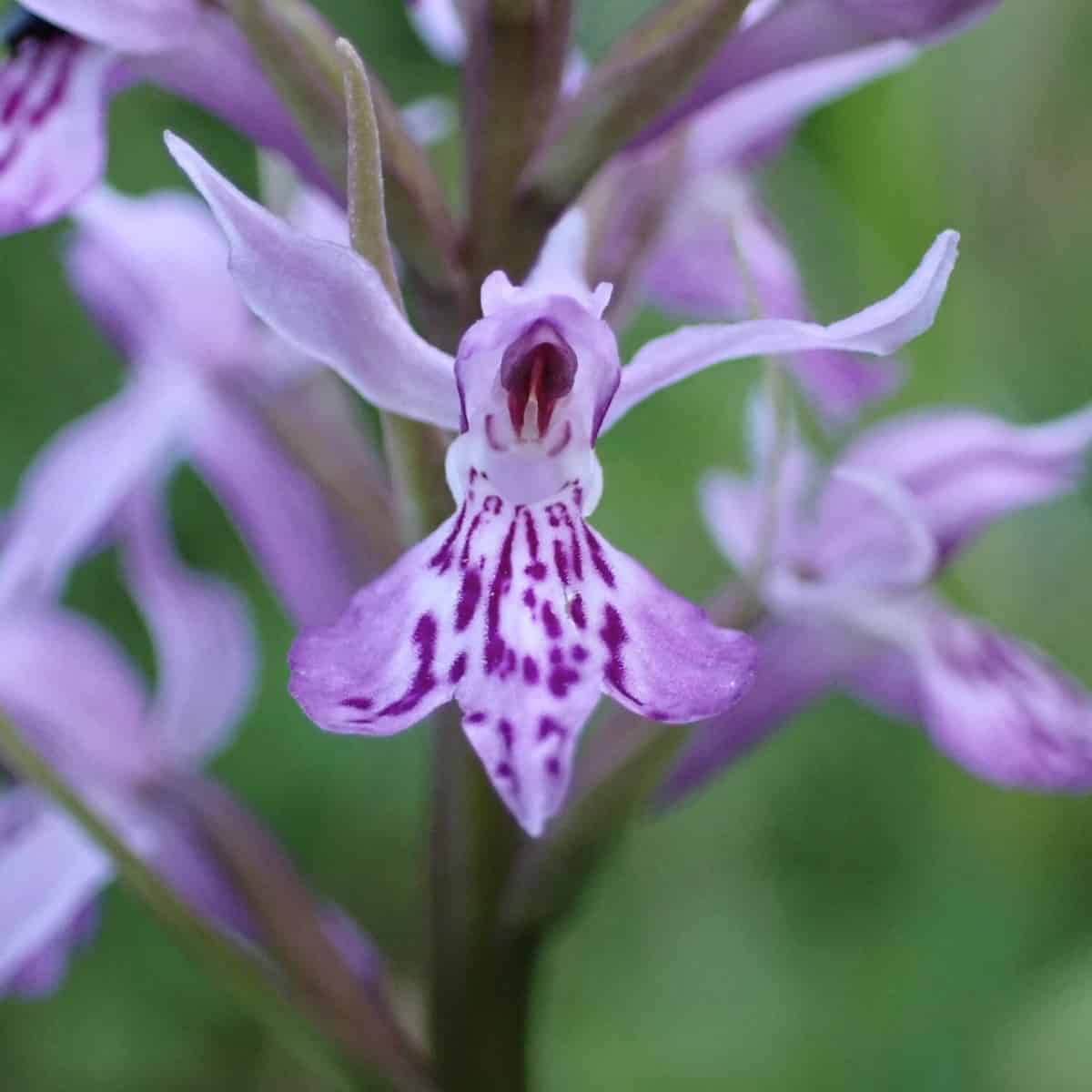
Cover image: Dactylorhiza fuchsii in Austria by Elias / iNaturalist CC-BY