

Plants are talking to each other in secret through the soil, and these underground messages could be limiting crop yields. A new study recently published in AoB PLANTS found that sorghum plants detect their neighbours through signals travelling in the soil’s water, triggering important changes in growth that might explain why increasing planting density does not always lead to higher yields.
Farmers have long known that crowding matters. If they pack the crops tightly, they do not grow as well and they get smaller yields. On the other hand, if they space the crops too far apart, they are wasting valuable land that they could be using to grow more crops. What has been less clear is how plants perceive their neighbours, especially under the ground, where roots compete and communicate out of our sight.
To better understand these belowground interactions, Shiran Ben-Zeev and colleagues looked at how different types of sorghum, which is a grain that can deal with drought and feeds a lot of people in Africa and Asia, respond to neighbouring plants. They set up some experiments to see if the plants were actually talking to each other through chemicals or if they were just reacting because they were close, to each other. The researchers wanted to know if sorghum plants change the way they behave just because there are sorghum plants nearby.
The team used two ways to grow plants together. In one, a focal sorghum plant was surrounded by neighbour plants in the same pot, but they made sure the leaves of the plants did not block each other’s light by shading them. This ensured that the plants were affecting each other through their roots than just competing for light.
In the second system, plants were never grown together at all. Instead, a nutrient solution was passed through pots containing sorghum plants and then researchers used this solution to water other pots that had a single focal plant. This way the focal plant only got the chemical signals that came from the roots of the plants.
When focal plants shared a pot with other plants, they consistently grew less. Their dry weight, height and leaf area were all reduced compared with plants grown isolated. Plants exposed to neighbours showed lower stomatal conductance, meaning they partially closed the pores on their leaves that control gas exchange (stomata), and a reduced efficiency of photosystem II, a key component of photosynthesis.
However, in the second experimental system, although plants never touched and did not compete directly for space or nutrients, they showed the same pattern. Focal plants watered with solution that had flowed through other plants’ roots showed reduced photosynthetic assimilation rates and lower stomatal conductance, just like the plants that had neighbours right next to them.
“Through two complementary experiments, we sought to investigate whether the belowground effects of neighbours could change plant growth, development, and physiology, even in the presence of ample resources. Overall, we found support for our hypothesis that responses to neighbours’ roots can influence plant productivity independent of nutrient availability.”
This suggests that sorghum plants are releasing chemical messages into the soil water that their neighbours can detect and respond to. These signals appear to be strong enough to make other plants change how they grow even if they are not next to each other.
What makes this really interesting is that different type of sorghum reacted with varying intensity to the same signals. All varieties tested showed the same pattern, they did not like having neighbours, but some were more sensitive than others. This variation is what plant breeders are looking for. If scientists can identify which genes control sensitivity to these signals underground, they might be able to breed sorghum that ignore these messages and keep growing even when the plants are packed tightly together.
READ THE ARTICLE
Ben-Zeev S., Penn A. Lawrence-Paul E., Abrams D. R., Ben-Zeev R.,Lowry C. and Lasky J. (2025) “Neighbour sensing through rhizodeposits in sorghum affects plant physiology and productivity” AoB PLANTS. Available at: https://doi.org/10.1093/aobpla/plaf065
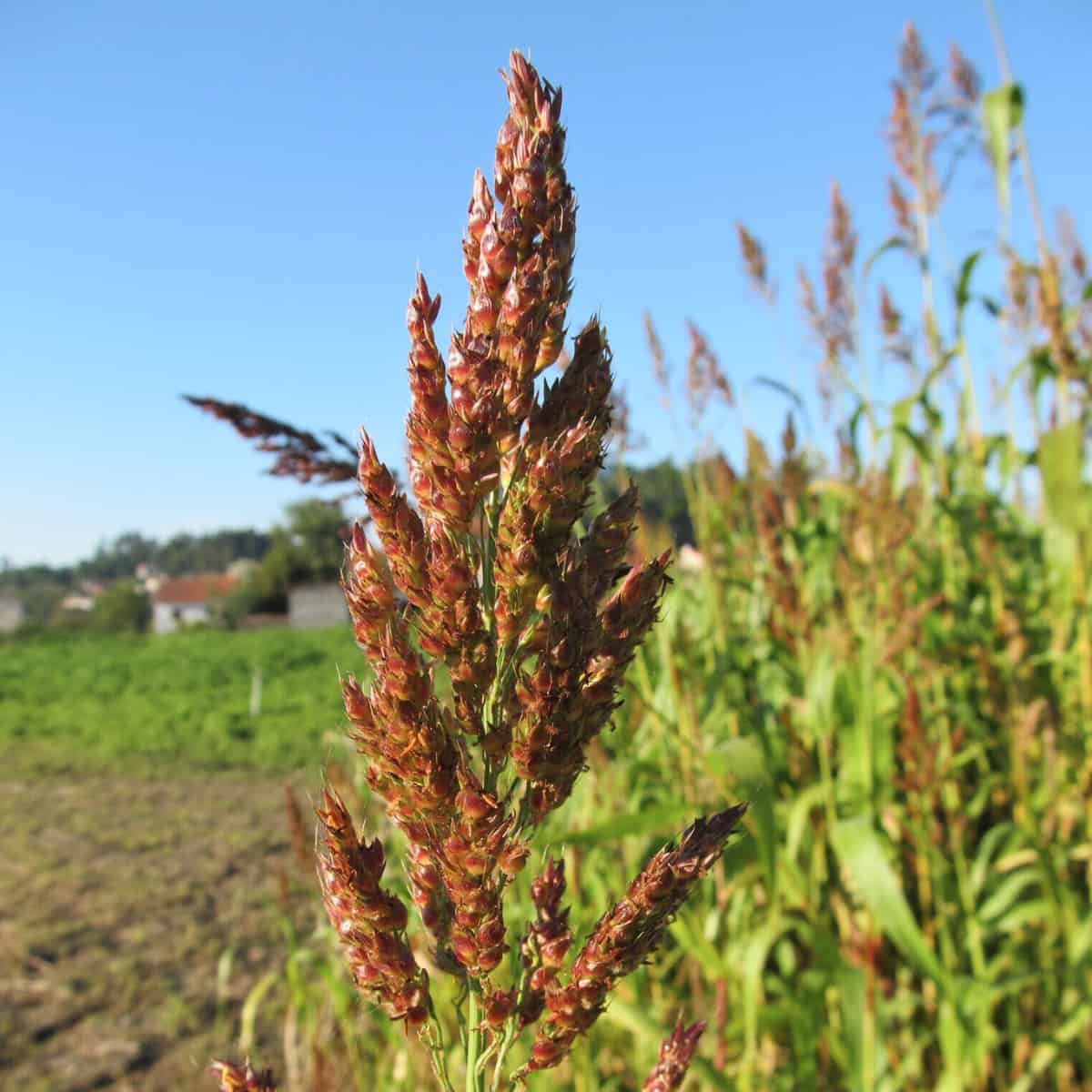
Cover image: Sorghum bicolor by zebedeugalinha/iNaturalist CC-BY