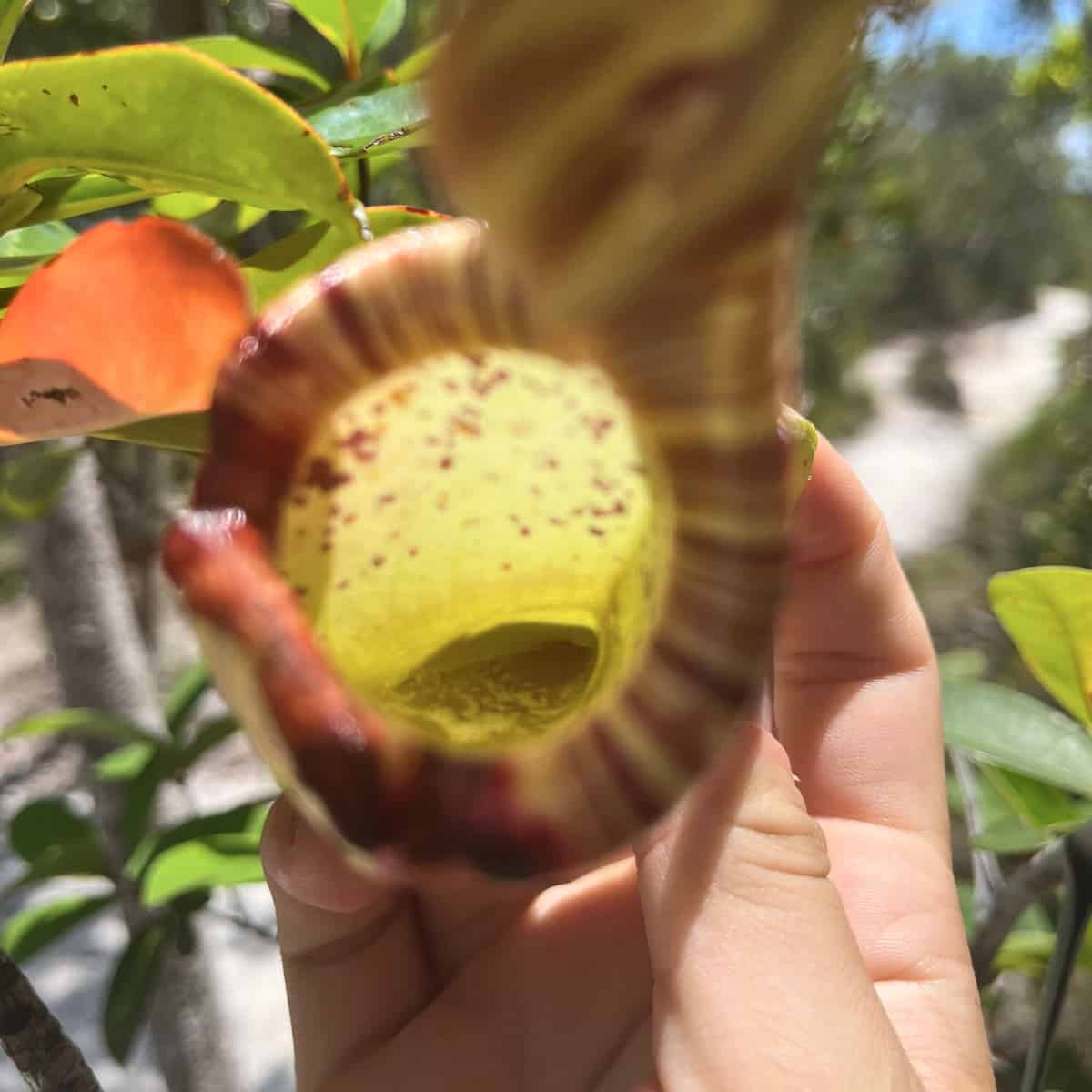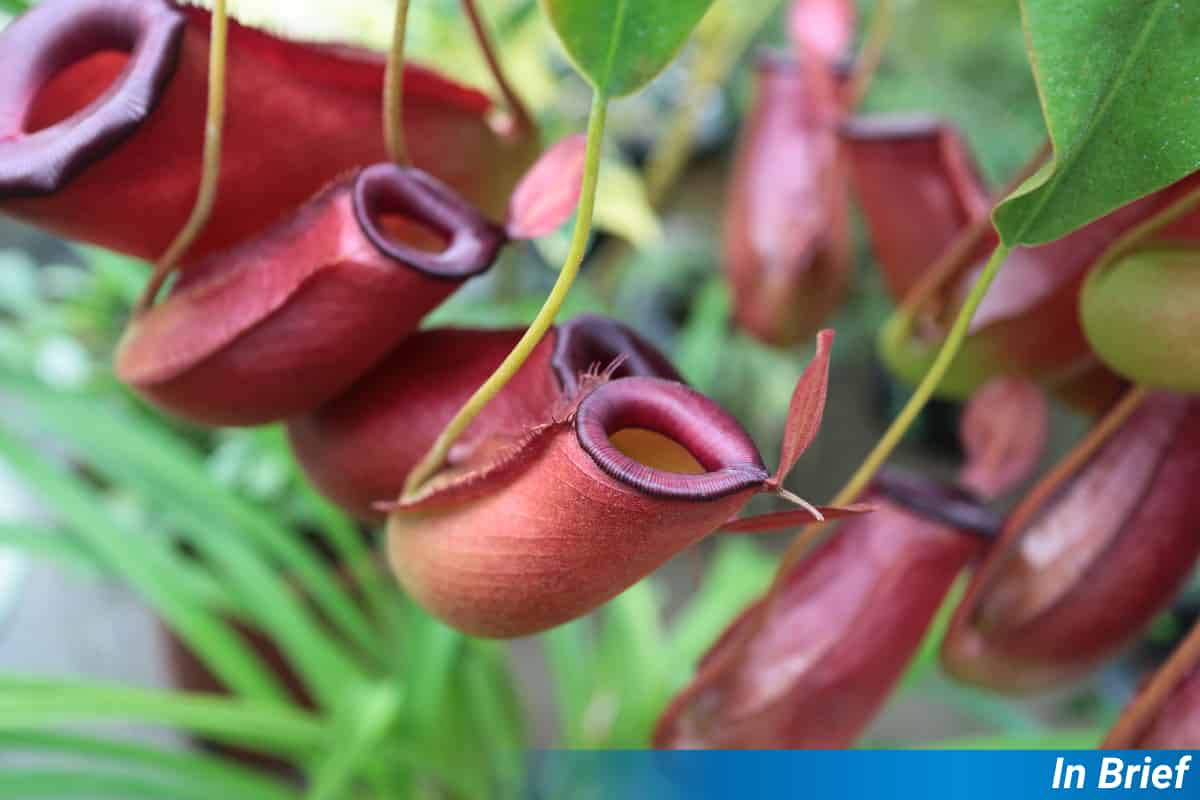


Lessware and colleagues studied the development of the slippery rim in Nepenthes pitcher plants. They discovered that this complex surface forms through a sequence of common plant growth processes, potentially offering insights into leaf development and inspiring new materials.
Using scanning electron microscopy, the team examined developing pitcher traps at different stages. They froze samples and looked at their internal structure, allowing them to see how the surface changed over time as the trap grew.
The researchers found that the pitcher’s rim develops in three main stages: cell alignment, formation of tiny projections, and directional cell growth. This creates a surface with ridges and steps that becomes extremely slippery when wet, trapping insects effectively.
This study builds on previous work on plant surface development. It shows that pitcher plants combine widespread growth processes uniquely to create their specialized trapping surface, suggesting common underlying genetic mechanisms across different plant species.
By describing the detailed morphogenesis of the Nepenthes peristome surface and linking the timeline of internal patterning events to externally visible traits of the developing trap, we open new opportunities to study the physiological and genetic mechanisms underlying complex epidermal patterning processes in plants.
Lessware, O.C., Mantell, J.M. and Bauer, U., 2024. Carnivorous Nepenthes pitcher plants combine common developmental processes to make a complex epidermal trapping surface. Annals of Botany, https://doi.org/10.1093/aob/mcae147 ($)