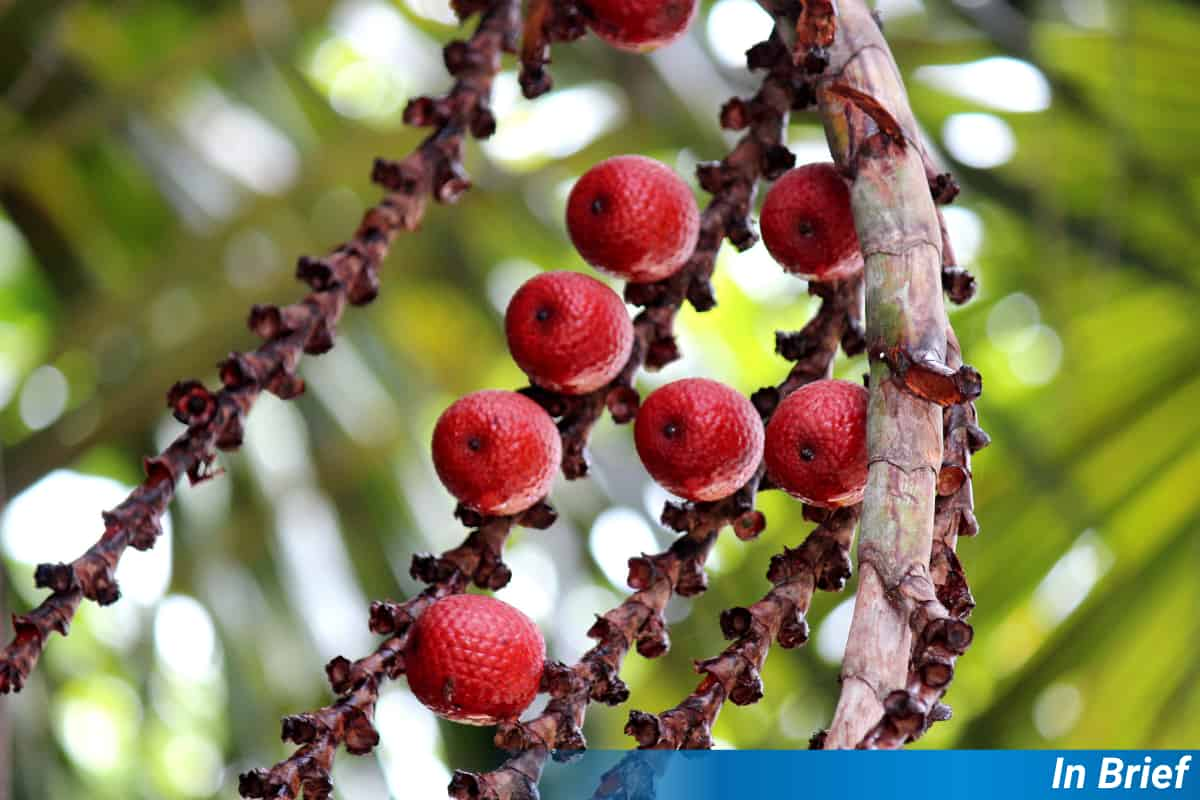


The seeds of buriti (Mauritia flexuosa), an emblematic palm of South American palm swamps, are known to lose viability when they dry out. Still, they can persist in the soil for a long time, an unusual ability for desiccation-sensitive seeds. Dias and colleagues conducted a thorough study of buriti seed physiological and anatomical changes in response to water stress.
The team exposed buriti seeds to different levels of water stress in the lab. They looked at changes in the seeds’ structure and chemistry using various microscopy techniques and biochemical tests.
Just like a sponge, the endosperm and mucilage reserves of buriti seeds were found to store great amounts of water. This allows the seeds to stay hydrated even when the environment is very dry. The seeds are also rich in phenolic compounds that allow them to adjust their metabolism during drought periods.
The study by Dias and colleagues provides fascinating insights into the mechanisms that allow the desiccation-sensitive seeds of Mauritia flexuosa to persist in the soil and grow in diverse environments across South America. Such information would be key to better understanding the potential effects of climate change on the regeneration of this species, which has such an intricate relationship with water.
Dias, G.P., Ribeiro, L.M., Mazzottini-dos-Santos, H.C., Nunes, Y.R.F. and França, M.G.C., 2024. Water stress resilience in Mauritia flexuosa (Arecaceae) embryos: New insights into the persistence of recalcitrant seed banks. Environmental and Experimental Botany, 105930. https://doi.org/10.1016/j.envexpbot.2024.105930 ($)