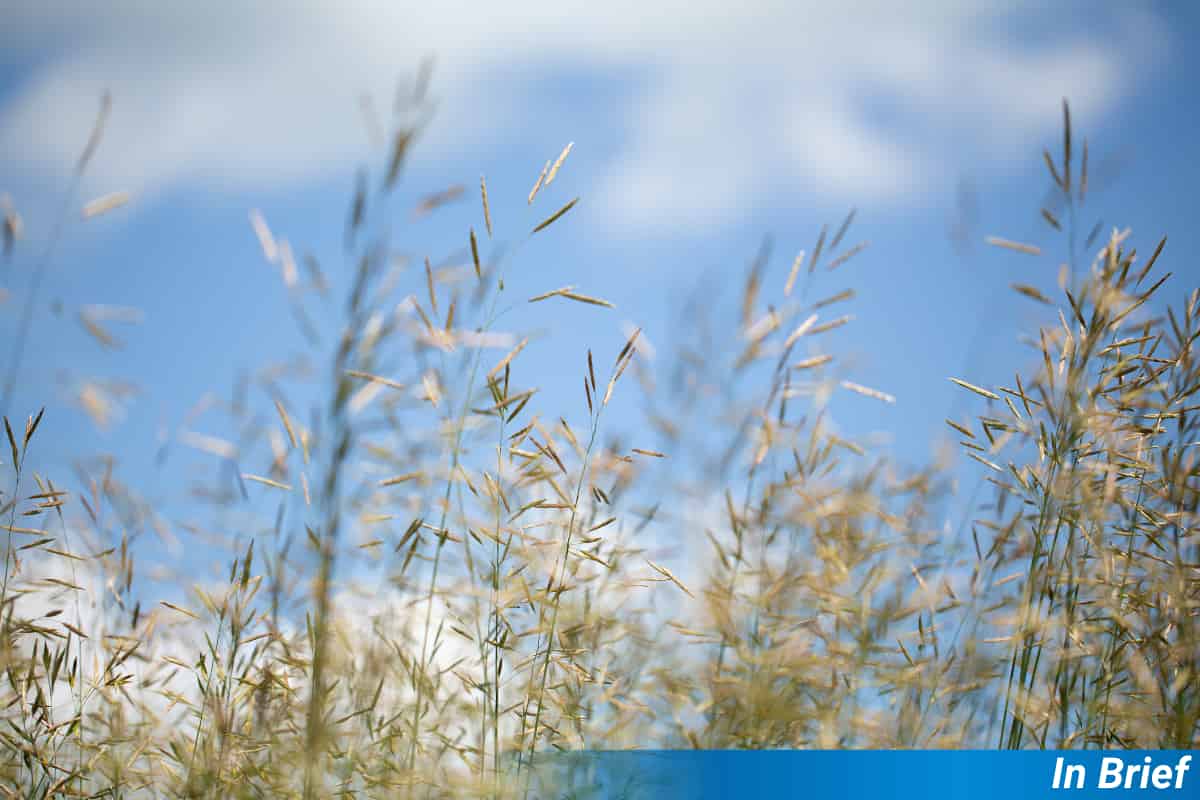


Fuchs and collaborators studied how the Epichloë fungus that lives inside meadow fescue grass affects the plants’ seeds when the grass is severely damaged. Interestingly, they found that while the fungus helps protect the plants’ offspring, it also reduces the seeds’ ability to germinate.
The researchers discovered that when the grass plants were repeatedly defoliated, the fungus focused on producing more toxic compounds in the seeds rather than supporting the plants’ growth. This extra defence came at the expense of seed viability, with defoliated plants producing fewer viable seeds than non-defoliated plants.
To investigate this trade-off, the team measured the levels of toxic alkaloid compounds in the leaves and seeds of the grass plants and the performance of aphids feeding on the plant’s offspring. They found that the seeds of defoliated, fungus-containing plants had higher alkaloid levels, which protected the young seedlings from aphids but reduced the seeds’ ability to germinate.
This research suggests that the partnership between grasses and endophytes is not always a win-win scenario. Under stress, the fungus may prioritize defending the seeds over supporting the current generation’s reproduction. As a result, the findings provide exciting insights into the variable prevalence of these fungal endophytes in natural grasslands, where the balance between defence and growth likely shifts depending on environmental conditions.
Fuchs, B., Damerau, A., Yang, B. and Muola, A. (2024). Reduced seed viability in exchange for transgenerational plant protection in an endophyte-symbiotic grass: does the defensive mutualism concept pass the fitness test? Annals of Botany, https://doi.org/10.1093/aob/mcae133 (OA)