


Humans aren’t the only ones in nature that like a bit of sparkle. Plants are known to have glossy leaves and flowers, fish scales glitter and birds can be iridescent. But does glossiness have a functional use in the plant species that shine?
A recent article published in Science Advances by Dietz et al asks this question for plant flowers and reveals that floral glossiness enhances a bee’s ability to see distant flowers but interferes with color discrimination of nearby flowers.

“We investigate the functional importance of glossiness for visual signaling using a plant-pollinator system,” write Dietz et al in Science Advances. “To understand the impact of surface gloss on flower detection and discrimination by pollinators, we use bumblebees (Bombus terrestris), a model organism in visual ecology.”
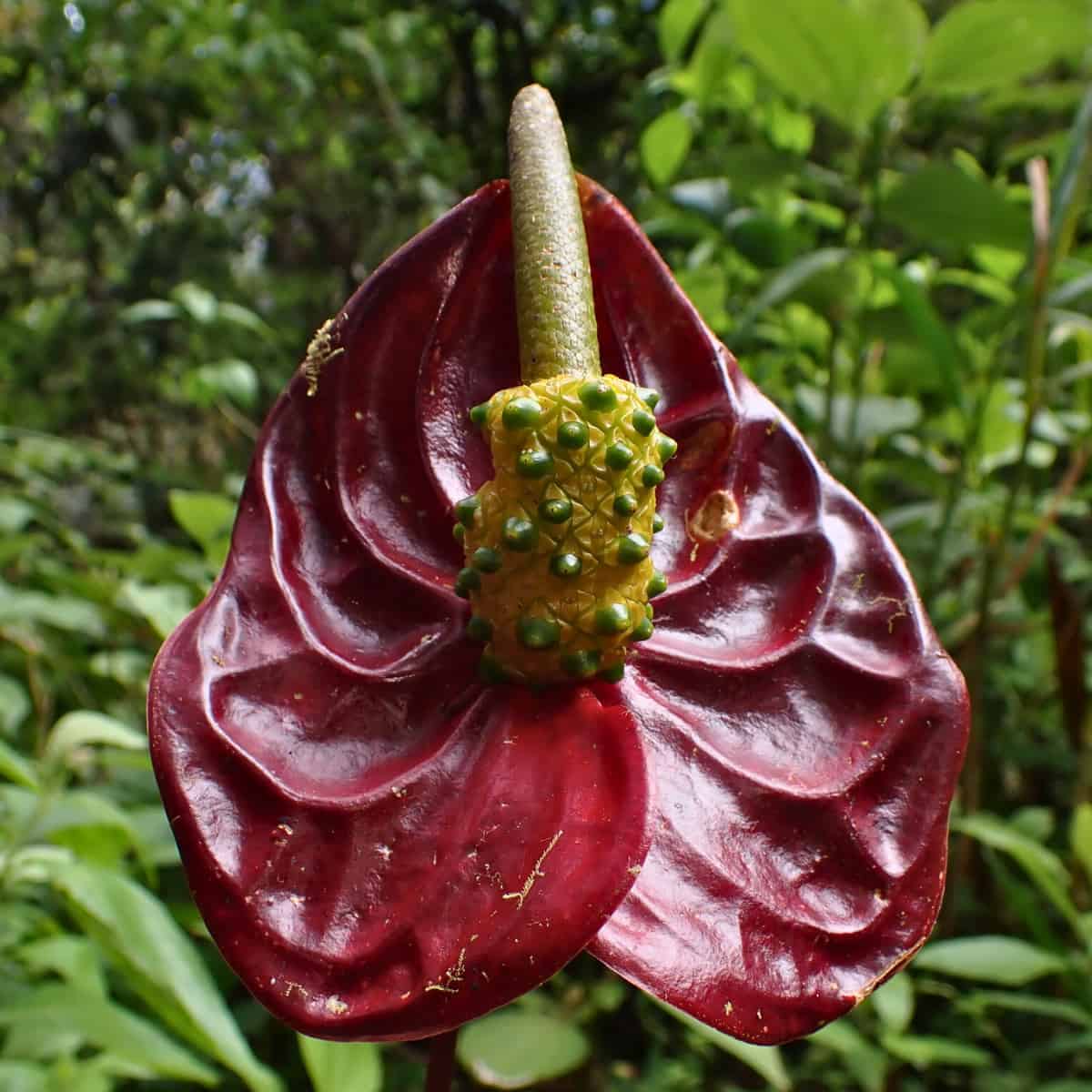
In nature, glossy flowers have flat epidermal cells, whereas the matte flowers have cone-shaped cells. This difference in structural biology is responsible for how sunlight is either reflected (glossy) or refracted (matte) at the cell surface. Dietz et al therefore constructed artificial surfaces with reflectance properties similar to glossy (Ranunculus repens, Anthurium andraeanum) or matte (Antirrhinum majus, Cosmos bipinnatus) flowers to test their bees’ preferences.
A bee looks for a suitable target. Video by Dietz et al.
They found that naïve bees, which had never experienced flowers before, innately preferred blue, matte stimuli. But when a sucrose reward was exclusively introduced to the glossy stimuli, the bee’s behaviour completely changed.
The bees learned to use glossiness as a foraging cue and increased their visits to the glossy stimuli. And the bees were able to see these glossy targets at much greater distances than their matte counterparts.
“Surface gloss makes flowers detectable from distances at which matte flowers of the same size and color are undetectable,” write Dietz et al in Science Advances. This was observed in a test using a ‘Y-maze’, in which the stimuli were systematically moved away from the bees to their threshold of visual detection.
Dietz et al write that this finding supports the hypothesis that repeated evolution of glossiness in floral signalling structures, such as petals, creates a selective advantage for visibility to pollinators.
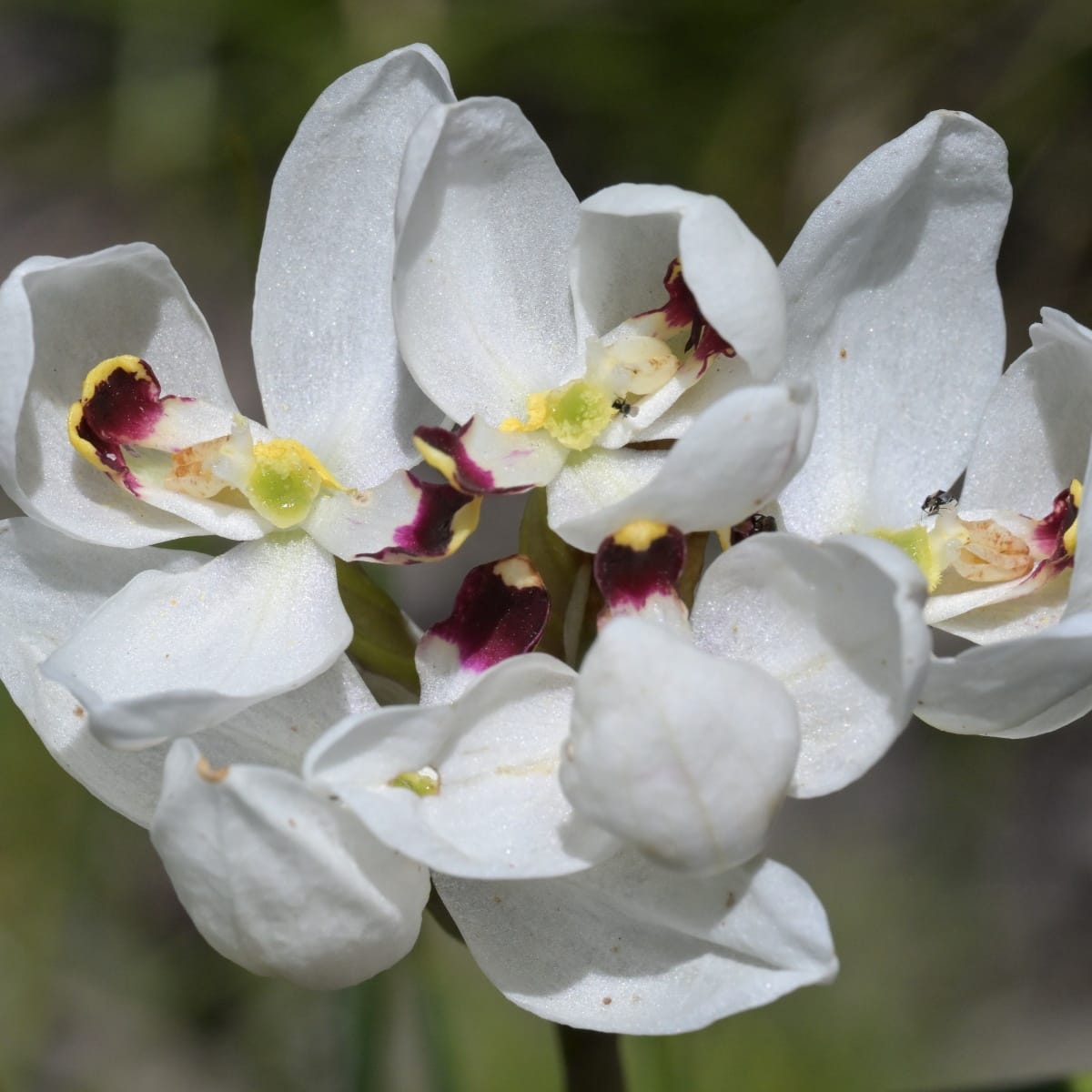
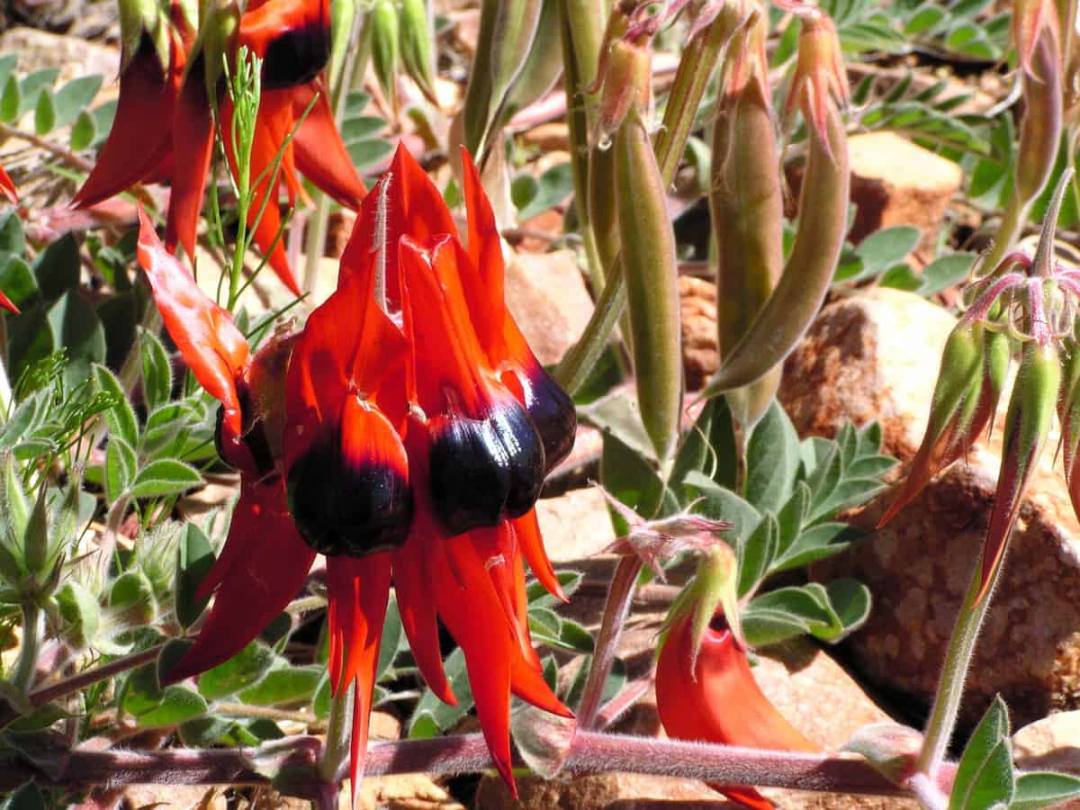
Indeed, glossy flowers are found in a phylogenetically diverse array of Angiosperm species, suggesting the trait’s convergent evolution is not linked to a particular pollinator or floral colour. Representative species include Anthurium andraeanum (painter’s palette/flamingo flower), Ranunculus repens (creeping buttercup), Swainsona formosa (Sturt’s pea), Hibiscus cannabinus (kenaf), Geissorhiza splendidissima (blue pride-of Nieuwoudtville), sexually deceptive orchids such as Ophrys speculum (mirror orchid), succulents such as Delosperma spp. and Ursinia anthemoides (solar fire), among others.
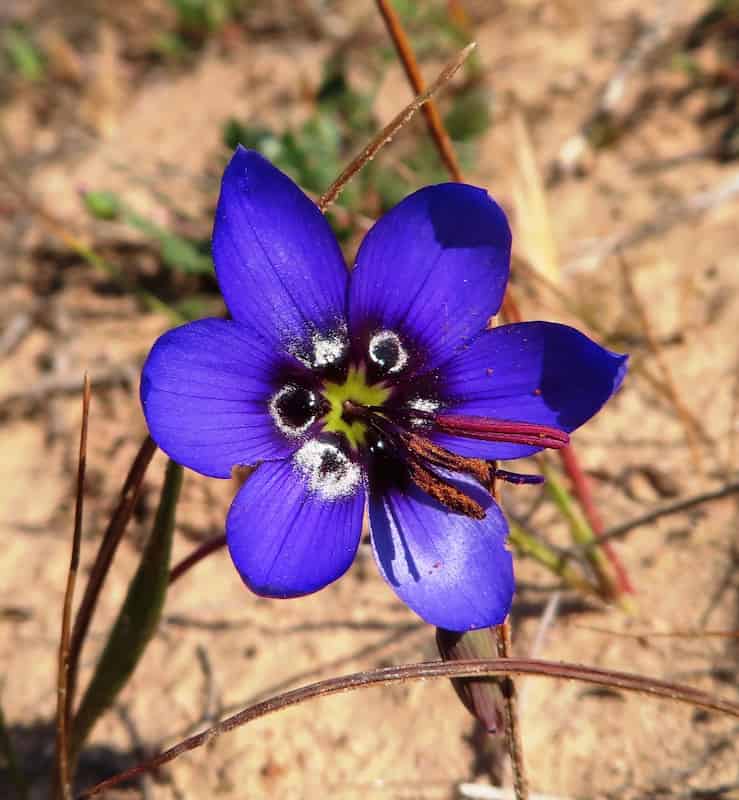
“Floral gloss is particularly visible in the full sun, so glossy visual effects are stronger in a moving flower in the field than in the static condition of our arena,” write Dietz et al in Science Advances. In contrast, Dietz et al propose that the conical epidermal cells of the matte flowers allow for a consistent, observable colour that nearby bees can use to find their preferred species.
However, it is important to note that flowers are more frequently matte than glossy, and so there must be a fitness cost to glossiness that results in its rarity. In support of this hypothesis, Dietz et al found that glossiness allows bees to see flowers from a distance, but the shine impedes colour discrimination between flowers when bees are up-close. And this colour discrimination is important for successful pollination.
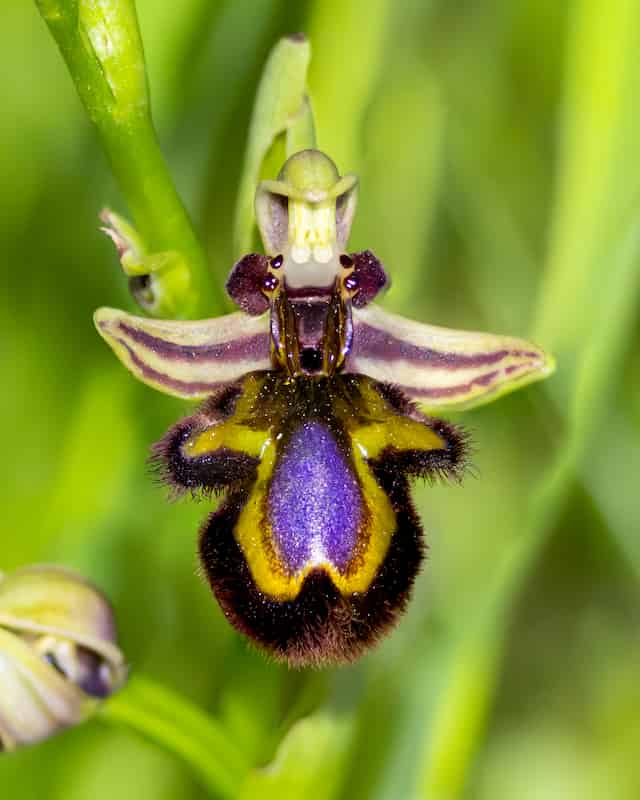
If bees cannot distinguish between species because they can only see the shine, then this in turn increases the rate of inter-species pollen transfer and decreases successful pollination overall.
And there are also implications beyond botany for predator-prey relationships. Lots of insects, such as beetles and butterflies, are glossy. Previous studies have shown that glossiness can hinder predators such as spiders, praying mantids and even birds from tracking and attacking their prey. Conversely, insects may use glossiness to detect females for mating.
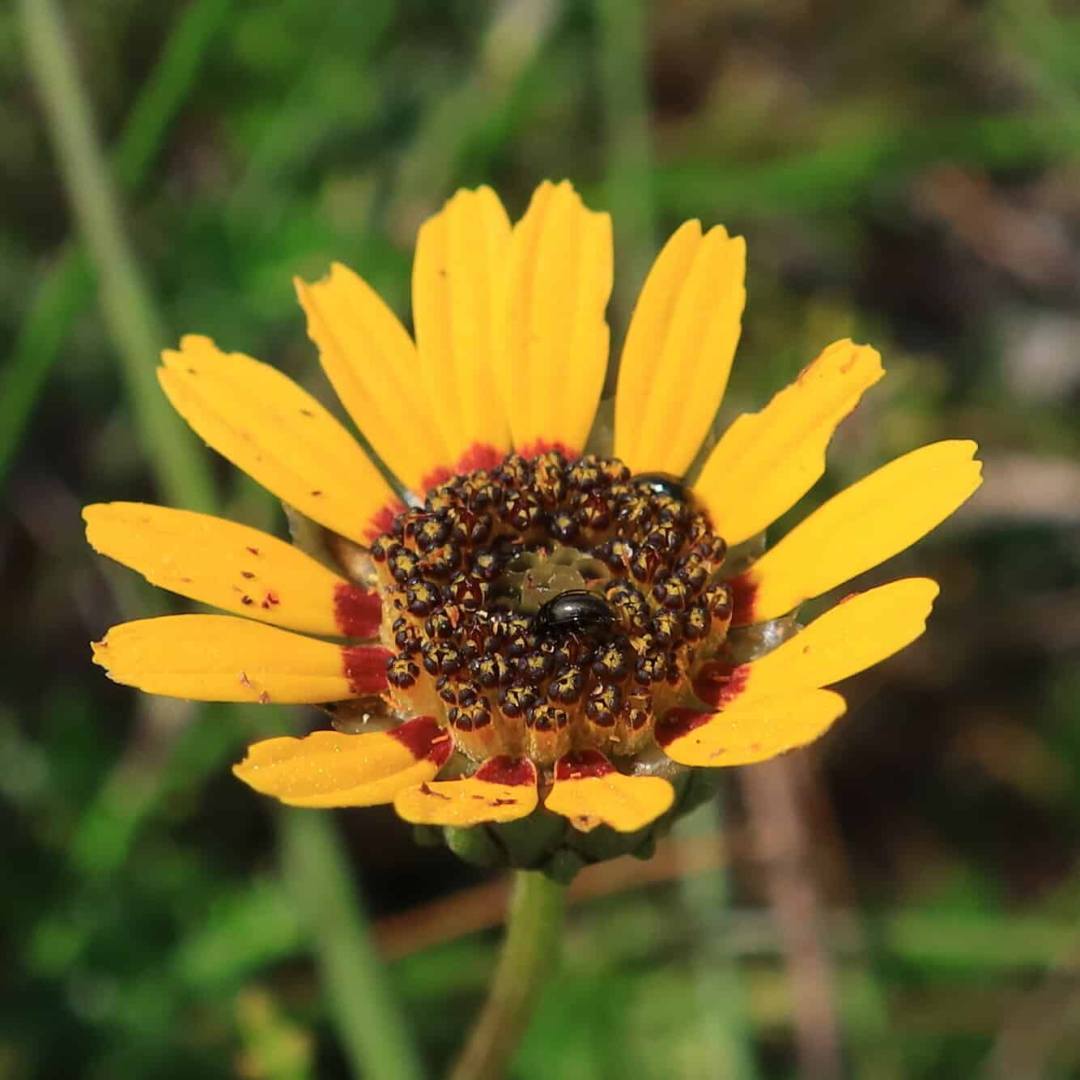
“What we show in plant-pollinator interactions is similarly likely to occur when a predator tries to capture a glossy prey target,” says Dr Casper van der Kooi, corresponding author of the study. The glossiness may reduce visual acuity for the predator due to camouflage or flash effects that occur when the target moves at high speed called ‘dynamic dazzle'.
But, in the competitive world of plant-pollinator interaction, a little razzle-dazzle helps a flower be seen from a distance.
READ THE ARTICLE
Dietz, A., Spaethe, J. and van der Kooi, C.J. (2025) “Dynamic visual effects enhance flower conspicuousness but compromise color perception,” Science Advances, 11(48), p. eadz9010. Available at: https://doi.org/10.1126/sciadv.adz9010
Cover image: Anthurium andraeanum in Ecuador by Nolan Exe / iNaturalist CC-BY