



To my shame, I’m not a plant scientist, which means I might be about to ask a silly question. But maybe not, so here goes.
Every year at this time I collect oak (Quercus robur) leaves. We don’t need to go into the reasons why (I need the tannins), but it’s something I look forward to. I love the smell of oak leaves, and for me it marks the turning of the season. Mists and mellow fruitfulness? Give me a thick carpet of oak leaves and hazy sunlight every time.
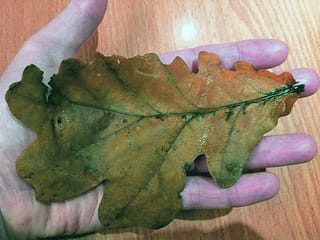
After the rain we had overnight, I popped out this afternoon when the sun came out and made my first collecting foray of this year. And I noticed something strange. I have favourite trees I collect from each year because they are convenient and because they a located where the leaves tend to be clean and carry little pollution. The leaves I have collected from these old friends today are the largest I have ever seen. I don’t have any formal data, but in 10 years of doing this, I have never seen leaves of this average size.
My working hypothesis is that the high rainfall during this year’s growing season is the reason for the large leaf area. Alternatively, I suppose it could be possible that low light levels during the early part of the growing season might have played a part?
So my question to you, O noble plant scientist, is – what’s going on here? And is there any data in the literature which supports either of these ideas, either in oaks or other species?