

Conventional wisdom holds that orchid seeds do not fare well in conventional cool, dry storage conditions used by seed banks. But a new study published in Annals of Botany challenges this long-held assumption, finding that seeds from some orchid species maintain viability for decades under such conditions.
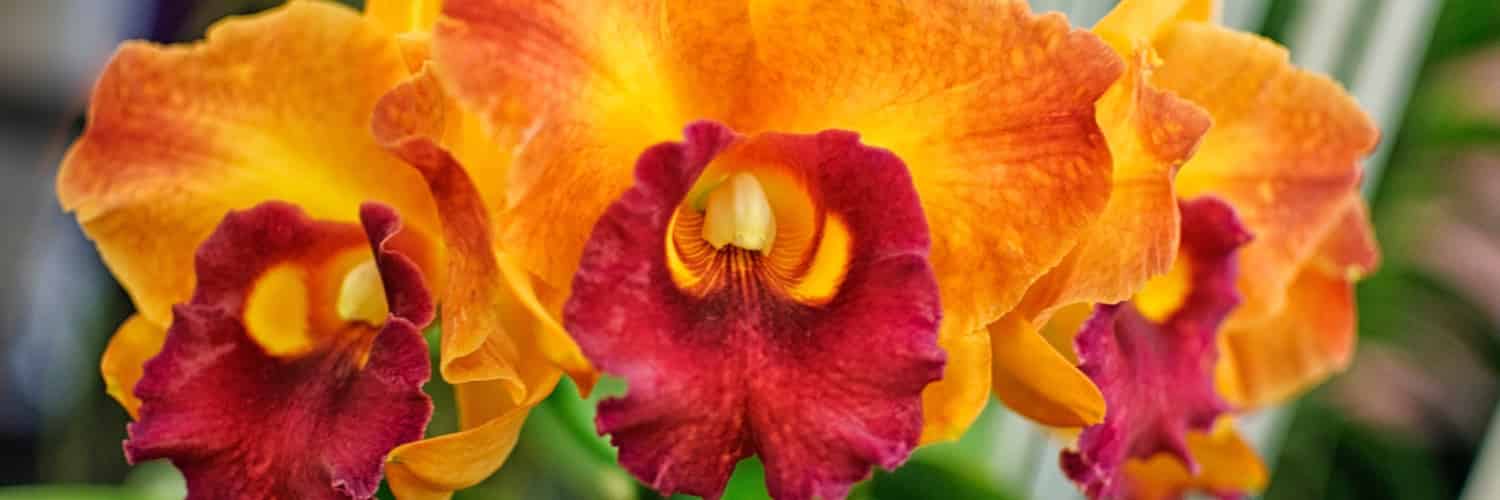
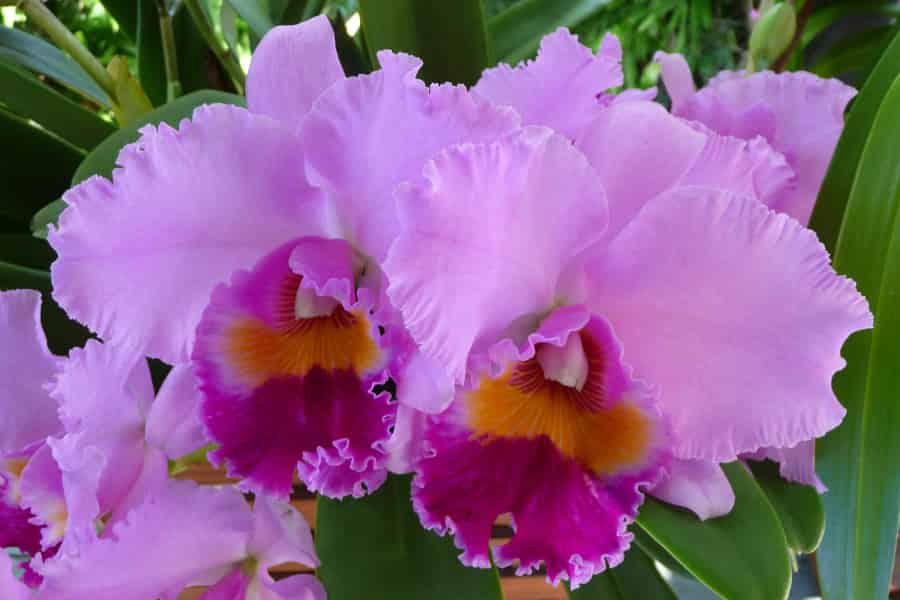
Researchers at the Universidad del Oeste Paulista in Brazil explored how physiological, biochemical and structural traits influence seed longevity in eight species of Cattleya orchids. They collected seeds from these orchids and carefully desiccated them to around 3% moisture content before placing them in cold storage at -18°C for over 10 years.
Periodically over this time, the researchers conducted germination tests, viability staining and metabolic profiling on the stored seeds to evaluate their storage lifespan. Surprisingly, after more than a decade of dry, cold storage, seeds from all species remained able to germinate, contradicting the idea that orchid seeds are inherently short-lived under these conditions.
Using statistical models, the team projected typical storage lifespans, or “P50y”, of approximately 30 years for seeds of six of the Cattleya species. Even more unexpectedly, the predicted lifespans for seeds of two other Cattleya species were much longer – possibly even centuries of cold storage viability.
The seed longevity parameters determined here for eight species of Cattleya indicate that the seeds are not short-lived and these species are not likely to be exceptional… Such longevity achieved here for Cattleya seeds may reflect the optimisation of steps in post-harvest handling.
Francisqueti et al. 2024
Looking deeper, the research team found clues to explain the variation in storage longevity between species. Analyzing seed morphology, they discovered the three species with seeds exhibiting the longest storage lifespan had significantly smaller airspaces surrounding the embryos – only 9-11% of total seed volume, compared to larger airspaces in others.
This structural trait likely allows for more even desiccation and better protection of the embryo during storage, the researchers suggested. Additional post-storage rehydration techniques, such as brief room temperature exposure or treatment with 10% sucrose solution, significantly boosted germination rates – especially in seeds with the smallest embryos.
Metabolite profiling via gas chromatography showed that seeds from all eight species contained high levels of linoleic acid, an unsaturated fatty acid associated with desiccation tolerance. Thermal analysis identified a peak in differential scanning calorimetry readings that correlated with storage longevity potential.
Taken together, these results challenge conventional beliefs about orchid seed storage. When properly desiccated, even orchid seeds demonstrate a tolerance to desiccation that enables long-term survival under conventional gene bank storage conditions.
Morphological and compositional traits provide clues to identify species with seeds best suited for long-term preservation. With nearly 900,000 known orchid species globally, many endangered, the findings offer hope that exhaustive orchid seed banking could help safeguard genetic resources for decades to come.
READ THE ARTICLE
Francisqueti A.M., Rubio Marin R., Marangoni Hengling M., Hosomi S.T., Pritchard H.W., Castilho Custódio C. and Barbosa Machado-Neto N. (2024) ‘Orchid seeds are not always short lived in a conventional seed bank!‘, Annals of Botany. Available at: https://doi.org/10.1093/aob/mcae021