

Few plants have been in the public eye and divided minds like cannabis – hailed, on the one hand, as a relaxing treat to boost creativity and take the edge off the daily grind, but stigmatized, on the other hand, as a dangerous, addictive gateway drug. Historically, strict drug policies have placed cannabis in the same category as heroin and LSD in many countries, and the illegal status of the plant has severely limited its research. Obtaining permits and funding to cultivate and investigate cannabis has long been a challenging endeavour for researchers. The first scientist to chemically isolate tetrahydrocannabinol (THC) from cannabis even relied on the police for their supply of plant material. However, the acceptance of cannabis has been rising both socially and politically in recent times, and many countries are easing restrictions on its use for medical or recreational purposes. This makes cannabis research easier and required more than ever.
Cannabis has been cultivated for thousands of years, and selective domestication has yielded two distinct forms: tall-growing hemp varieties, whose bast fibers and hurds are used to produce ropes, textiles, or building materials, and drug varieties with a high flower-to-leaf ratio and high levels of the phytocannabinoid tetrahydrocannabinolic acid (THCA), which can be converted into the psychoactive drug THC, for medical or mind-altering purposes. The predominant phytocannabinoid in hemp is cannabidiolic acid (CBDA), which gives rise to the non-intoxicating cannabidiol (CBD). CBD has been clinically proven to be effective in treating seizures in certain types of epilepsy and can also be found in wellness products such as soft drinks, chewing gums, and bathing salts. Due to an increased demand for CBD by the pharmaceutical and wellness industries, breeders aim to develop cannabis varieties with economically desirable traits, such as a compact plant build optimised for growth in controlled environments, high flower biomass and CBDA yield, and low levels of THCA. This has been achieved by incorporating genes from hemp into a drug-type variety, yielding new cannabis types —known as chemovars— whose unique combinations of phenotypic traits and underlying genetic makeup require detailed investigation to optimise growth and CBDA production, and for further selection of desired genotypes.
A recent work by Dr Ricarda Jost and colleagues compared the performance of a THC-dominant with a CBD-dominant drug-type cannabis chemovar in a controlled environment setting that is typical for cultivation of medicinal plants. Their work revealed surprising differences that will affect breeding and cultivation of cannabis for commercial CBD production. The THC-dominant variety showed expected good performance with high inflorescence biomass and cannabinoid yield, with its stunted growth phenotype being well suited for indoor cultivation. The CBD-dominant chemovar, however, retained several features of its hemp parent, such as profuse vegetative growth and low flower production, which resulted in a decreased cannabinoid yield compared to the THC-dominant variety. Also, hemp is very efficient in nutrient uptake as it is well-adapted to growth on marginal soil that is poor in the main plant nutrients nitrogen and phosphate. The CBD-dominant chemovar seems to have retained this high nutrient uptake capacity which became detrimental to plant performance when grown with ample nutrient input as is common for the cultivation of drug-type cannabis.
These plants showed a poor ability to sense and regulate the uptake of nutrients, especially phosphate, leading to its hyperaccumulation in leaves to toxic levels and adverse effects such as low photosynthetic activity and early leaf senescence. The research team also found a number of genes involved in phosphate and nitrogen homeostasis that were differently expressed between the CBD- and the THC-dominant chemovars and which may contribute to the altered nutrient sensing, acquisition, or distribution of the former. Understanding the distinct nutritional requirements of different cannabis varieties and the underlying genetic regulation is an important step towards selective breeding of new drug-type varieties and improved performance.
The findings also open up opportunities for the development of new sustainable cultivation strategies for chemovars with reduced nutrient input to optimise plant growth and cannabinoid yield. Thanks to the newly formed interest as a medicinal plant, cannabis is outgrowing its image as a lifestyle drug of the hippie generation. With the change in cultural values and political restrictions comes the need for large-scale commercial cultivation. The work presented by Jost and colleagues highlights that further fine-tuning of cannabis genotypes and cultivation conditions is required to optimise performance and yields. Furthermore, the domestication history of cannabis leading to phenotypically diverse hemp- and drug-types provides an interesting model to investigate how trait selection has shaped its genetics and vice versa.
READ THE ARTICLE:
Jost, R., Berkowitz, O., Pegg, A., Hurgobin, B., Tamiru-Oli, M., Welling, M. T., … & Whelan, J. (2025). Sink strength, nutrient allocation, cannabinoid yield, and associated transcript profiles vary in two drug-type Cannabis chemovars. Journal of Experimental Botany, 76(1), 152-174. https://doi.org/10.1093/jxb/erae362
Mareike Jezek
Dr. Jezek is an Assistant Editor at the Journal of Experimental Botany, one of the official journals of the Society for Experimental Biology.
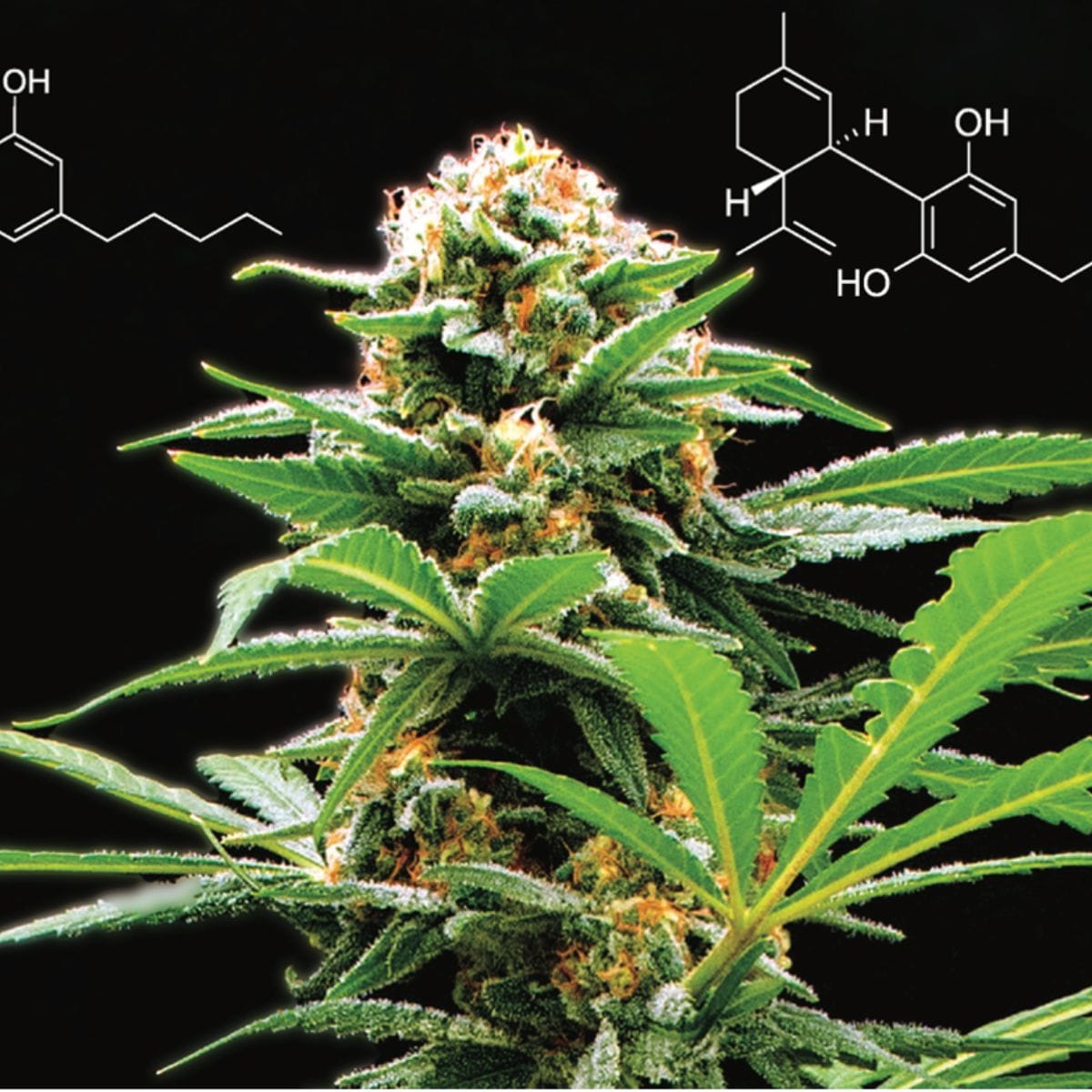
Cover picture by Ricarda Jost and co-authors.