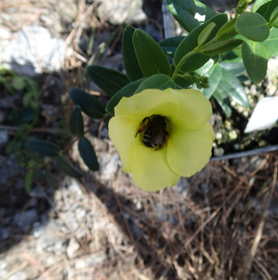


Pollination studies often use visitation frequency of potential pollinators as an indicator of their importance, but this is only one component and may not reflect actual pollen-transfer rates. In a recent study published in AoB PLANTS, Barrios Roque et al. used new approaches to understand the pollination biology of the pineland golden trumpet, Angadenia berteroi, a charismatic wildflower species that is native to south Florida pine rocklands, and ubiquitous in this imperiled, fire-successional habitat. In this system, the width of the proboscis of the pollinators was correlated with pollen transfer efficiency, and longtongued bees were the most effective pollinators, though many other species visited the flowers. The distinctive morphology of these flowers, with a large bell and a narrow, short tube, suggests that other flowers of this shape may similarly benefit more from visitors with mouthparts shorter than previously considered optimal.