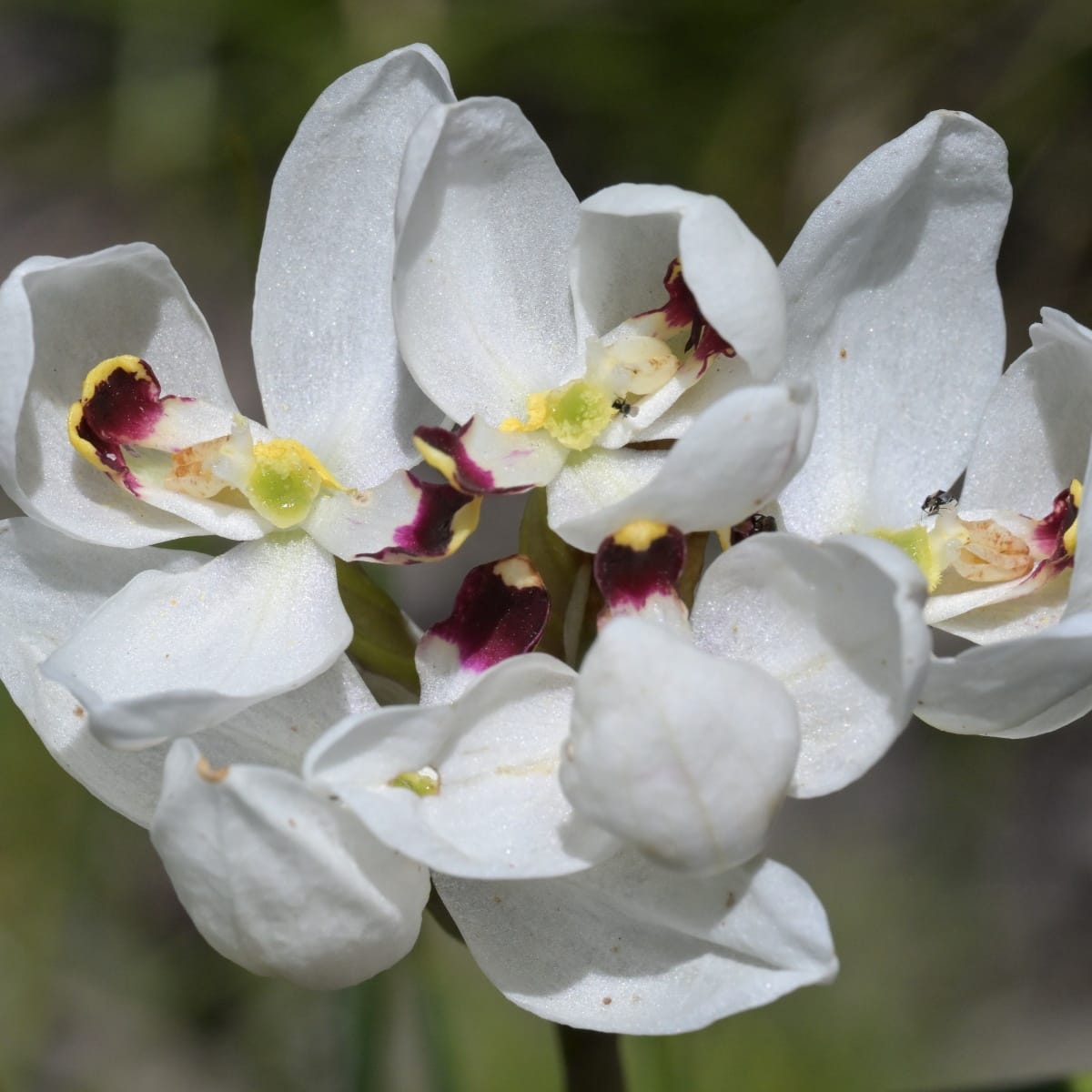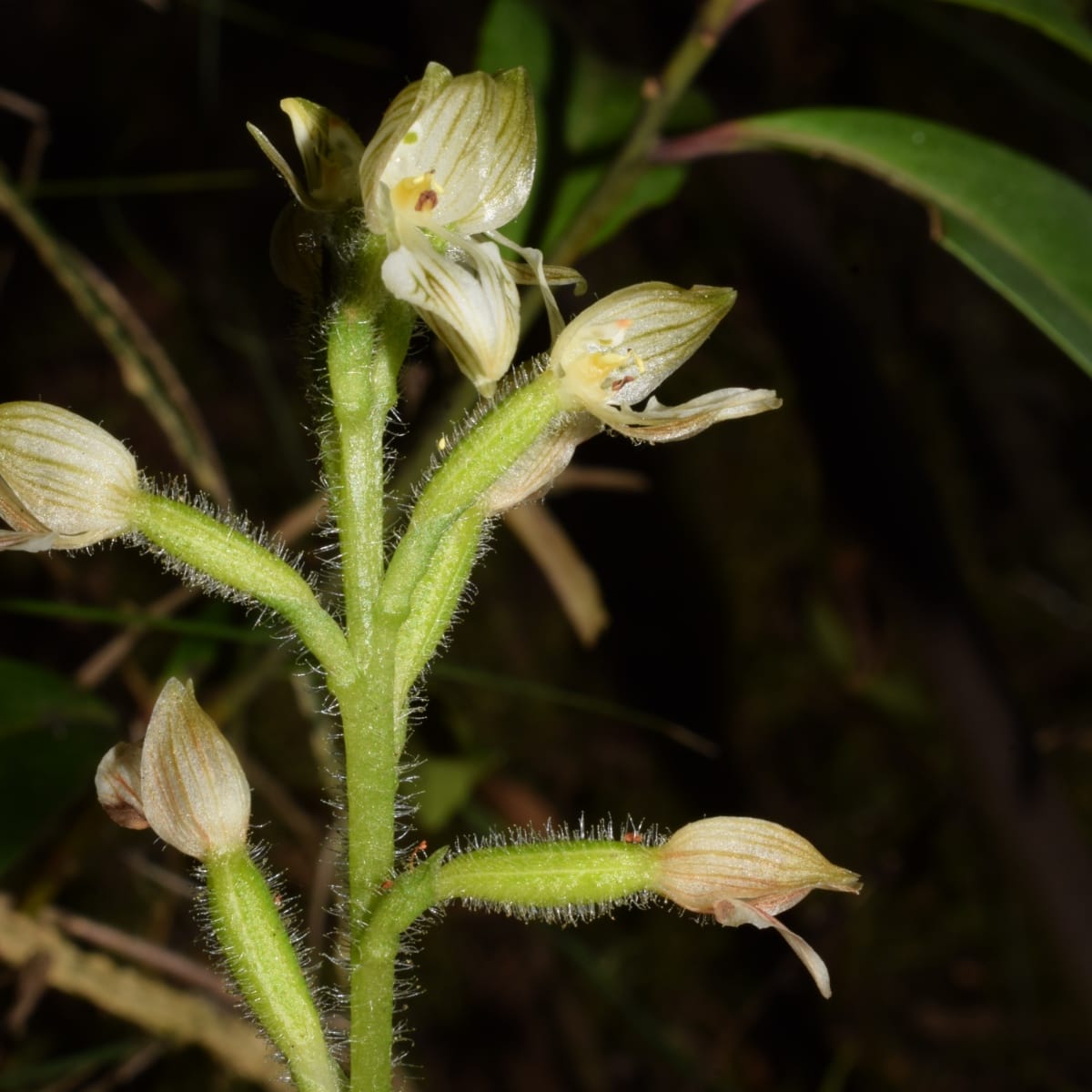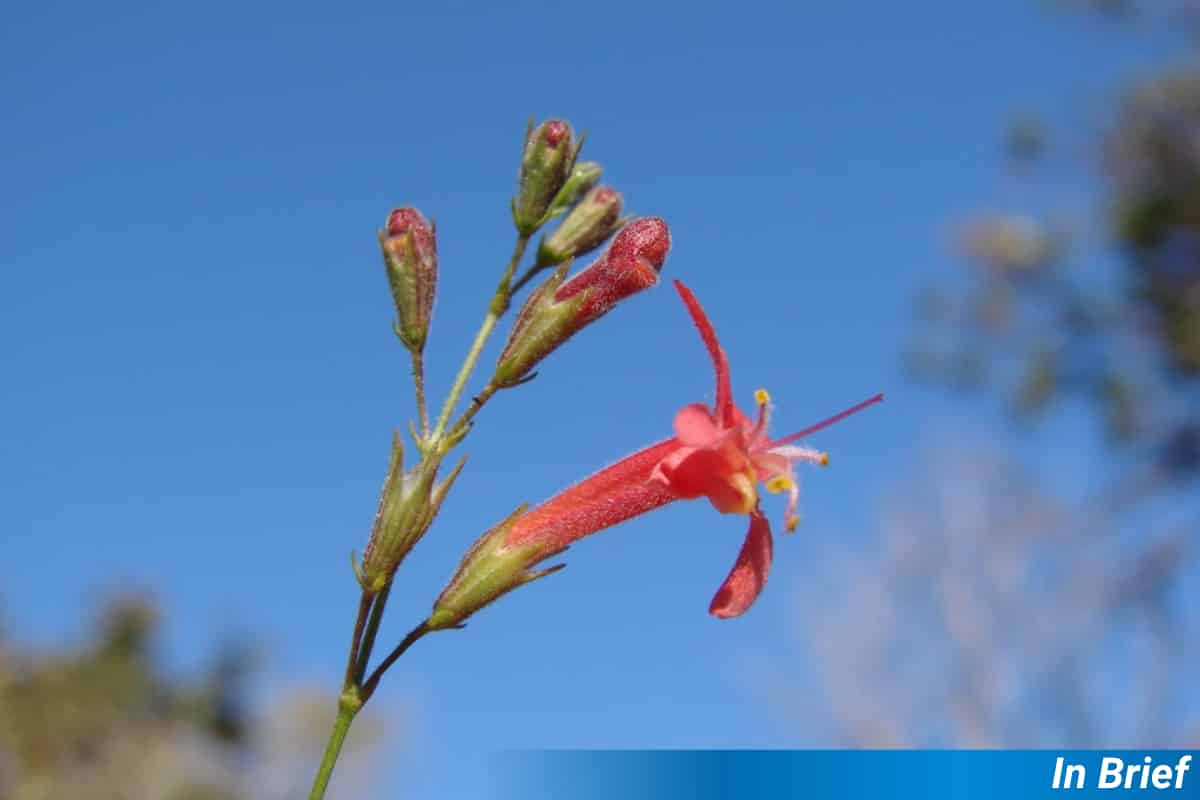


The flowers of different plant species show various structural changes in response to pollinator contact. In the case of Hypenia macrantha, when their flowers are triggered by a pollinator, their anthers are catapulted forward with the aim to impact on the pollinator’s body. However, a recent research by Anderson and colleagues suggest that such explosive mechanism not only allows the pollen to come into contact with the pollinator, but also helps to remove pollen from other plants that might be adhering to it.
The team simulated flower visits in the lab using a hummingbird skull with treated pollen grains that could be observed and quantified under UV-light. In order to assess whether the flower’s explosive mechanism effectively removed existing pollen, they counted pollen grains before and after visits to a triggered and untriggered flower.
The researchers found that untriggered flowers removed nearly twice as much existing pollen from hummingbird bills compared to already-triggered flowers. This indicates that the explosive release of pollen actively displaces competitors’ pollen, potentially increasing the plant’s chances of successful pollination.
Previous studies focused on pollen competition within flowers or during pollen tube growth. Stil, the research by Anderson and his teams introduces a new arena for plant competition: the pollinator’s body. For instance, the authors draw parallels with sperm competition strategies in animals, suggesting similar evolutionary pressures in plants.
Anderson, B., Sabino-Oliveira, A.C., Matallana-Puerto, C.A., Arvelos, C.A., Novaes, C.S., Calaça, D.C.D.C., … & Brito, V.L.G.D. (2024). Pollen Wars: Explosive Pollination Removes Pollen Deposited from Previously Visited Flowers. The American Naturalist, https://doi.org/10.1086/732797 ($)
Cross-posted to Bluesky, Mastodon & Threads.
Cover image by João Medeiros – Hypenia macrantha, CC BY 2.0, Link