


Mosses are frequently described as tolerant to environmental stress. But what does this really mean in the tropics, where dry and rainy seasons completely transform the environment every few months?
In a new study, researchers Lopes and Furlan followed the moss Brittonodoxa subpinnata to understand how its antioxidant system varies across seasons and how this biochemical choreography enables the species to survive in harsh sites such as trunks and rocks, whilst conditions alternate between cooler, cloudier, and wetter months and warmer, drier, and sunnier periods.
The authors collected samples of the moss from four sites across two contrasting biomes: shaded, humid areas of the Atlantic Forest in southeastern Brazil and more open Cerrado remnants in the centre of the country, where drought, solar radiation, and water deficit are more severe.
Linking this environmental context to measurements of oxidative stress, that is the production of harmful molecules damaging to cells, and antioxidant responses revealed a clear pattern: across all sites, antioxidant defences strongly intensified during the dry season. Four key enzymes, namely catalase, glutathione reductase, ascorbate peroxidase, and superoxide dismutase, which neutralise these damaging oxidants, showed markedly higher activity at this time, often tripling rainy-season levels, whilst compounds such as ascorbate and glutathione accumulated more in Cerrado populations. Despite regional differences, physiological markers confirmed that Brittonodoxa subpinnata maintains an efficient antioxidant recycling system under stress, highlighting seasonal acclimation as its primary resilience mechanism.
One of the most surprising results was that, contrary to the authors’ initial expectation, plants exhibited higher levels of oxidative damage in cell membranes during the rainy season rather than in the dry season, even though you would expect the dry season to lead to greater environmental pressure through water deficit and heat. This was evident from elevated levels of malondialdehyde (MDA), a marker of cell membrane degradation, which were higher in rainy months, indicating damage precisely when water was abundant, despite the overall increase in antioxidant capacity across all regions during the dry season.
This finding challenges the intuitive idea that oxidative damage peaks during drought, when tissues undergo repeated cycles of desiccation and rehydration. The authors suggest that high temperatures, high humidity, and strong solar radiation during the rainy season may destabilise cell membranes and favour the formation of reactive oxygen species not fully neutralised by the classical enzymatic antioxidant system. For instance, at several sites, hydrogen peroxide levels were also higher during this period, reinforcing the idea that “excess water” and intense light can be as stressful as drought for a poikilohydric moss adapted to intermittent hydration.
When comparing Atlantic Forest and Cerrado on a broader scale, the researchers observed that time of year played a more important role than geography. Although the two regions differ strongly in vegetation structure, canopy cover, and radiation regimes, seasonal transitions between dry and rainy periods explained most of the variation in oxidative markers and antioxidant activity.
Taken together, the results show Brittonodoxa subpinnata not as a moss that simply “tolerates” stress, but as a species that continuously adjusts its redox machinery to keep pace with a dynamic tropical climate. As climate change alters the duration and intensity of droughts, heatwaves, and heavy rains, this kind of plasticity may determine which bryophytes continue to thrive on trunks and rocks and which will quietly disappear from tropical forests and savannas. Its a reminder that resilience in tiny plants goes far beyond a physiological curiosity: it offers valuable clues about how life can persist in an ever more environmentally unstable world.
READ THE ARTICLE:
Lopes A S, Furlan CM. 2025. Seasonal regulation of the antioxidant systems confers resilience in the moss Brittonodoxa subpinnata. Theoretical and Experimental Plant Physiology 37. https://doi.org/10.1007/s40626-025-00389-w
Portuguese Translation by Pablo O. Santos.
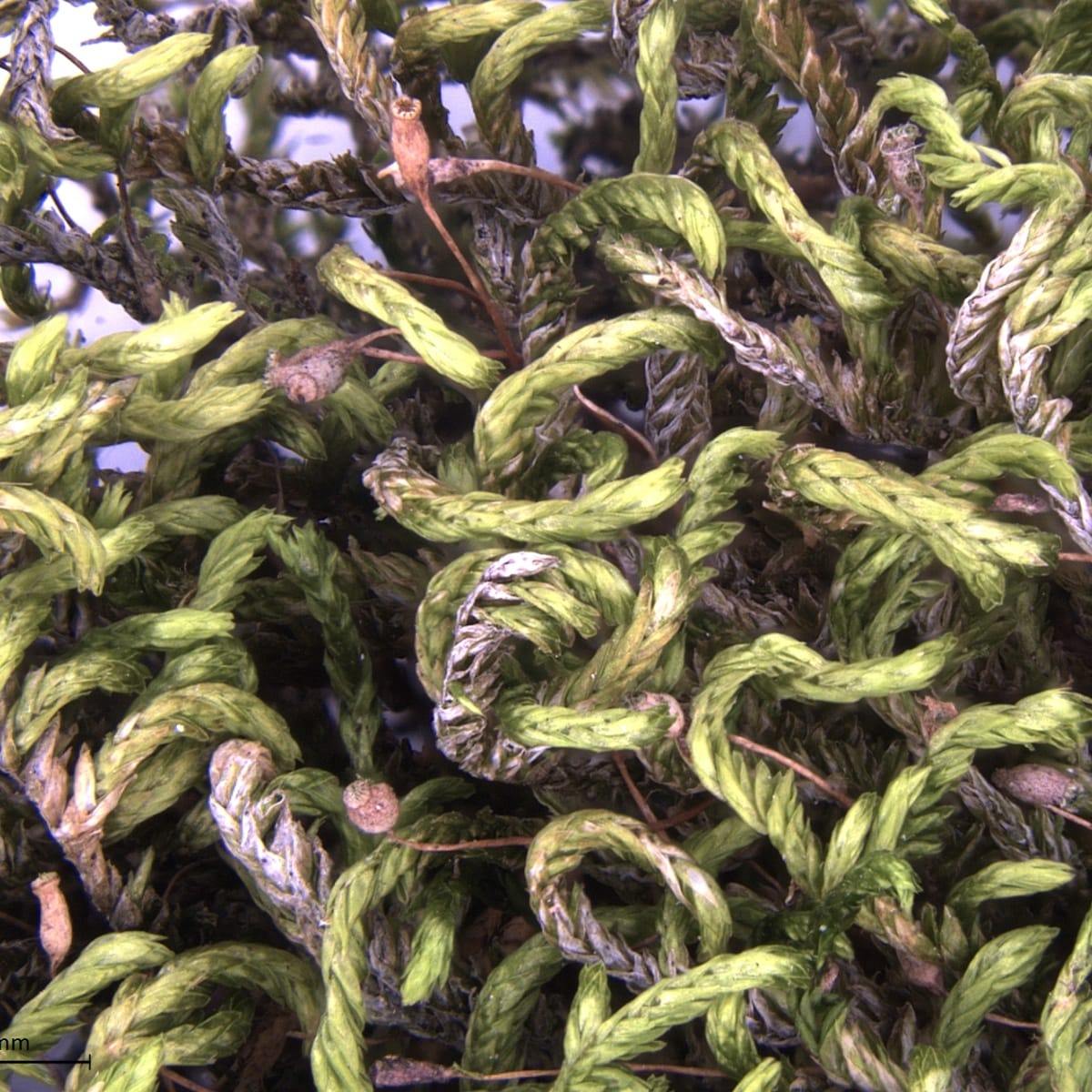
Cover picture: Brittonodoxa subpinnata by Adriana S. Lopes.