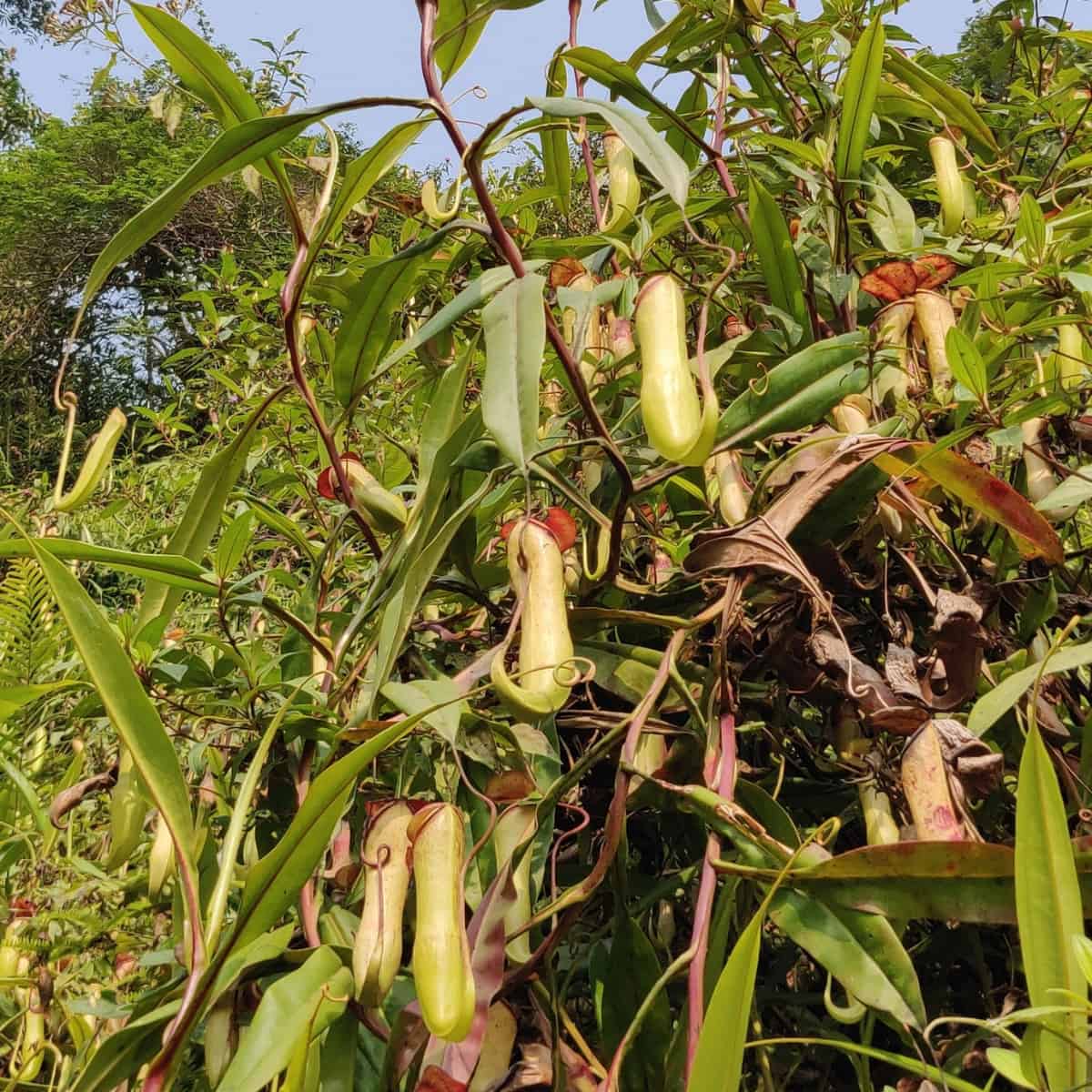



Nepenthes pitcher plants use all sorts of lures to attract their prey — colours, scents, and even a special nectar. This extrafloral nectar, which is produced on the slippery rim of the pitcher opening and lid, has long been thought of as a sweet nutritional reward for visiting insects and small mammals. But a new study published in Plant Biology has exposed a startling secret. The sweet secretion of the Nepenthes pitcher is a toxic trap.
“This study clearly demonstrates that Nepenthes extrafloral nectars provide only minimal nutritional benefits, instead they function as toxic baits aiding prey capture,” write Lathika et al.
The toxic activity was attributed to the neurotoxin isoshinanolone, which was identified in the extrafloral nectars collected from the rims and lids of Nepenthes khasiana, N. mirabilis and various hybrid species growing in the conservatories of the Jawaharlal Nehru Tropical Botanic Garden and Research Institute in India.
Isoshinanolone poisons visiting ants via acetylcholinesterase inhibition, a process that blocks the breakdown of the neurotransmitter acetylcholine and as a result disrupts proper nervous system function. When poisoned, the unlucky ants exhibited slow movements, muscular weakness, enhanced grooming, fell upside down, had spasms and even died.
Lathika et al also studied the sugar, protein, amino acid and mineral contents of the extracted nectars. They found very low levels of proteins and no free amino acids. But the extrafloral nectar was rich in sodium, potassium, calcium and magnesium.
“Amino acids provide taste and nutritional benefits, while proteins function as preservatives in floral nectars,” write Lathika et al. “Amino acids at trace levels undermine the nutritional gains of Nepenthes extrafloral nectars.”
Furthermore, the sugars found in the extrafloral nectar produced by Nepenthes appear to be part of the prey capture mechanism, rather than a tasty and nutritious treat for visitors. All three sugars detected, sucrose, glucose and fructose, are hygroscopic, meaning they absorb and retain water from their environments. The sugars were present in different concentrations than normally observed in the sweet floral nectars typically used to attract pollinators. This suggests that the sugar concentrations in the extrafloral nectar of Nepenthes may be optimised for the creation of a slick surface on the rim of the pitcher and that the plant uses their hygroscopic properties to aid in prey capture.
“Extrafloral nectar with its toxic effects affecting the mobility of visiting insects on a wet-low friction, slippery peristome [rim], with the waxy-slippery zone beneath and toxic viscoelastic digestive fluid at the base of the pitcher are crucial designs favoring prey capture,” write Lathika et al.
It is clear from these results that the extrafloral nectar of Nepenthes does not serve the nutritional needs of their visiting insects but instead serves themselves. The sugar-rich, toxic secretion is a bait and trap for the many ants and other prey who visit.
READ THE ARTICLE
Lathika, C.C., Sujatha, G.B., Thomas, G., Johnson, A.J., Viswanathan, G., Varghese, T.S., Mohamed, S., Shereefa, L.A. and Baby, S. (2025) “Bait, not reward: CO2-enriched Nepenthes pitchers secrete toxic nectar,” Plant biology (Stuttgart, Germany), 27(6), pp. 1022–1034. Available at: https://doi.org/10.1111/plb.70033
Cover image: Nepenthes khasiana in India by T R Shankar Raman / iNaturalist CC-BY