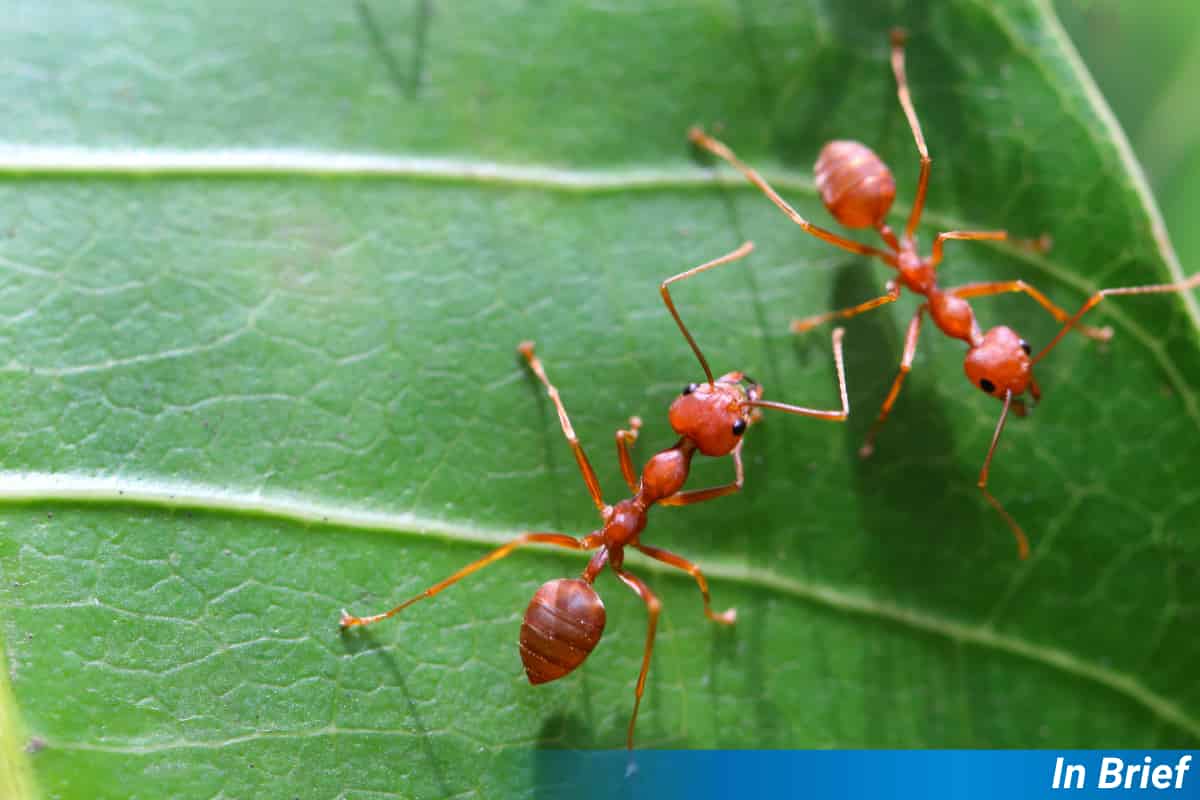


Some plants have mutualistic relationships with ants, where the plants offer resources —such as nectar— and the ants defend the plant from herbivores. In this study, however, Souza and colleagues were interested in the indirect effect of such interactions and investigated how plants sharing protective ants influence each other’s defence. While some plants attracted more ants, this didn’t lead to reduced leaf damage for neighbouring plants.
The team studied 21 plant species in the Brazilian Amazon, observing ant visits and measuring leaf damage. They used network analysis to understand how plants indirectly affect each other through shared ants and compared herbivory levels among plant species.
Plant species with more active nectar-producing glands attracted more ants, particularly dominant ant species. However, this increased ant presence didn’t result in less leaf damage for nearby plants that were less attractive to ants. The authors attributed the lack of indirect effects to the low levels of herbivory on the plants tested and the ants’ small foraging areas.
Unlike previous studies on pollination, this research found limited indirect effects among plants sharing protective ants, challenging previous assumptions about plant-ant interactions. This result suggests that the impact of shared mutualistic partners can vary greatly depending on the specific type of interaction and the organisms involved.
Souza, C., Leal, L. C., Baccaro, F. B., Bergamo, P. J., Bronstein, J. L., Rey, P. J., & Nogueira, A. (2024). Ant sharing by plant species bearing extrafloral nectaries has a low impact on plant herbivory in a tropical system. Journal of Ecology, 14394. https://doi.org/10.1111/1365-2745.14394 ($)